
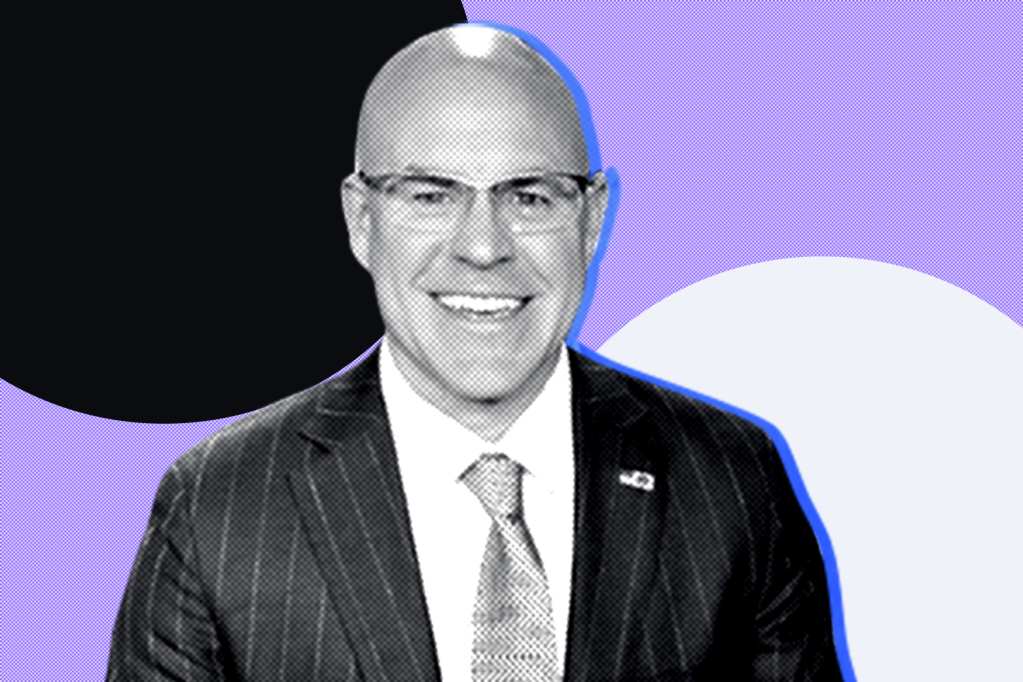

This is a transcript of the podcast A chat about crypto with former FBI agent and financial crime expert, Ren McEachern, between McEachern and North America Content Manager, Julie DiMauro.
[INTRO]
The two discuss the state of play in the digital asset space, from new and pending US laws and state-level initiatives to fighting fraud and appreciating the risks and rewards such assets harbor.
Julie DiMauro: Greetings everyone, and welcome to a Global Relay Intelligence and Practice (or GRIP) Podcast. I am Julie DiMauro, North America content manager for GRIP, talking to you from New York City.
I am so pleased to announce that today’s podcast session features Ren McEachern, CEO at Glacier21, president at TrustStorm, and former FBI acting unit chief.
I’m going to ask Ren to please introduce himself and describe his background before we kick off the program, if you would please, Ren.
Ren McEachern: Yeah. Thanks, Julie. Excited to be a part of the podcast and appreciate the opportunity. Yeah. Ren McEachern, a former FBI agent I think what’s probably most relevant for for your audience is that five years of my 12 at the FBI, I was actually in charge of the FCPA program, both at the program level, headquarters, and also as a supervisory special agent of the field offices overlooking FCPA investigations and looking at compliance programs working obviously with DOJ, SEC.
I looked at the important parts of compliance and how all of that impacts internal investigations and how deferred prosecution agreements come out of, you know, these issues with compliance. Your audience knows these areas well.
So I’ve been on both sides.
I’ve investigated companies when I was with the government and then, you know, now my private sector life I’ve also worked with companies to understand risk mitigation and to bolster areas and to to be smart and put resources where they’re best used, basically understanding how the enforcement groups work.
My background ultimately means that I spent a lot of time in complex financial crime and then also the newest area of complex financial crime being cryptocurrency and blockchain technologies.
And just the next new, basically money laundering vehicle and how we think about that with so much new legislation going on. And so that’s what we’re I’m excited to talk about today with you.
Julie DiMauro: Terrific. And GRIP is excited to talk about it with you as well, so thank you for being here, again.
‘When the US Senate committee hearings on the pending market structure legislation is something I want to talk to you about. First, let’s talk about their bill. It builds on the House version, H.R. 3633, the Digital Asset Market Clarity Act of 2025 or the Clarity Act. First, what are the main components and goals of the legislation in terms of regulatory oversight of digital assets, decentralized finance protocols and non-fungible tokens?
Plus, I know there are some Bank Secrecy Act and AML obligations. What’s going into the Act, and we’ll talk about the amendments separately.
Ren McEachern: Yeah. So it’s it’s really bifurcated. You have the Senate AG Committee, Agriculture Committee, which has oversight over the CFTC. And then also you’ve got the Senate Banking Committee which has oversight of the SEC. And so the trick of this, of this act is bringing these oversight components together to determine who really has jurisdiction oversight over virtual asset markets, and how does that interact with banking and all these other issues that come with that.
And so that’s being ironed out. And so when you think about it, the AG committee is working through what they think the CFTC should be doing with regards to oversight.
And then that’s going to be kind of bumping heads a little bit with what the AG and what they think the SEC and the Banking Committee and the SEC should be doing. And it comes down to the definition of securities and commodities and these these kind of nuanced terms when it comes to what that means for compliance.
And so the bigger issue really is I think also for your audience is with this will it determine who’s going to be doing the enforcement and how are they going to do the enforcement and what are going to be those guardrails for enforcement?
This is important because it also gets us away from the previous administration, where SEC enforcement basically was was the vehicle to determine what the legislation was, which is, you know, unheard of really. And we need we want we want rules. We want regulatory oversight over these markets. In order for the innovation to succeed, we need some sort of compliance elements.
And so that’s what’s being ironed out. You’re definitely going to have, which is quite clear in the language, I think there’s a lot of agreement on all the anti-money laundering and BSA requirements and sanction requirements that are going to go into that, which is quite critical. Now, there’s other issues about non-fungible tokens and how they’re defined.
One of the things that’s within that is basically the CFTC, or I should say the AG committee saying that something like an NFT is is seen as really not as an investment vehicle, but more like a piece of art.
And so it doesn’t really have some of the oversight requirements. And then also people that are involved as third parties and the development of blockchain technologies, do they have to be regulated like a bank or crypto exchange? And I think the answer likely there is no, but yet to be fully determined. Right.
We don’t want to regulate every piece of that puzzle, just the groups that are going to be having custody, right, like the banks and the digital cryptocurrency exchanges and understanding what the definitions are and what the rules are.
And so that’s what’s being ironed out. Things were going pretty well until recently, all things considered, that actually having a bipartisan bill actually get forward, just like the GENIUS Act last year. But there’s been some recent hiccups.
Julie DiMauro: Absolutely. Now, let’s talk about those amendments. There were a number of them. One of the trickiest outstanding issues is a clash over whether to allow crypto exchanges to offer stablecoin rewards programs that pay an annual percentage yield or interest, really, which has pitted the crypto world against banks.
Can you tell us a little bit more about this?
Ren McEachern: Yeah, so the banks are in fear that all of their very valuable deposits and people that deposit money and get a couple points of interest annually on those deposits are going to take those deposits and they would call it deposit flight over to a cryptocurrency exchange, because they’re going to convert, in theory, their dollars into some stablecoin, and they’re going to get what we call rewards at a cryptocurrency exchange. And those rewards can be four or five percent.
And so the banks are afraid they’re going to have all this, you know, all this flight of deposits Go to the exchange and the exchange will have all these advantages.
And so that actually is where the fight is right now. And under the the GENIUS act, they did allow for yield with cryptocurrency exchanges. And so one of the things the Clarity Act is trying to do is close that loophole for the banks. And so this is going to be a tough issue.
Now somewhere there has to be an agreement in the middle. Everybody wants this to go through. The banks quite frankly have been slow to innovate, where obviously the digital currency exchanges have been way out ahead of course. But essentially the industry is coming together, right?
Banking and crypto is coming together. We saw that with the GENIUS Act. This is happening. It’s just how does it happen in a fair way? And so that’s what the butting of heads is right now.
Julie DiMauro: That makes sense. Now there’s certainly hope that lawmakers will find a compromise that both banks and crypto exchanges can live with. It sounds like from you, but it’s an interesting amendment and they have deferred for now a couple of other ones. I know there was kind of an ethical question over such things as President Trump’s holdings in crypto.
And, you know, it didn’t mention him by name, but it did talk about political officials having interests or significant financial ties. It sounds like they’re dealing with that separately, am I right?
Ren McEachern: Yeah. There’s obviously some conflicts of interest or a sense of conflicts of interest with a sitting president that, in theory, has some potential financial benefits under that example.
The true beneficiary is not, you know, the Trump administration, but there are certain elements where he could certainly gain financial, you know, elements if they are to actually be vertically integrated through this application of a trust, which basically would vertically integrate that organization with stablecoins. So you can issue a stablecoin, but then you have to have a reserve, right. Because stablecoins, 99% of them are tied to the dollar. So it’s a one to one exchange.
And what they’re trying to do, and a lot of the exchanges are doing the exact same thing, is also hold the reserve and issue the coin. Okay. And so that vertical integration really, you know, in line with the GENIUS Act and with the compliance that we’re, you know, been speaking about, um, would position that company to do quite well from a financial lending perspective. And so that’s the issue.
But these are kind of new frontiers if you will, because things are moving so fast that technology is moving so fast. And you have a president also quite aggressive in this area and quite frankly has a significant crypto agenda, you know, which is, you know, good and bad in lots of ways.
But obviously we we believe that with something like cryptocurrency and blockchain, we want to regulate it. We don’t want people to have to go to other jurisdictions, other countries. We want people to start companies here around this. It’s changing the financial systems.
So it’s it’s a brave new world, so to speak. But that is being worked out separately. And, um, certainly I can see why people see that as a conflict of interest.
Julie DiMauro: Now, Ren, earlier in January, House Representative Ritchie Torres, Democrat from New York, introduced the Public Integrity in Financial Predictions Market Act of 2026, which, if enacted, would ban federally elected officials from making insider trades on prediction sites.
Can you tell us about this and what transactions are targeted here?
Ren McEachern: Yeah, this is quite interesting. If you recall, the STOCK Act really goes back to the idea that, you know, and when I was in the FBI, I actually spent two years in congressional affairs, spent a lot of time on the Hill. And the consideration that all of these hearings, these closed hearings, these closed briefings, members of Congress and other government officials, right.
Other elected officials, not necessarily in Congress, obviously, the elected officials, but other government agencies, people that have inside knowledge that’s not public, that they’re able in the Stock act as far as trading stock.
But in this, it’s more the polymarket like polygon markets or these prediction markets where you can say, I think the New England Patriots are going to beat the Denver Broncos on Sunday. And I want to bet this amount of money. Well, you can basically, you know, make those kind of gambles on any sort of event to include the passage of legislation.
Right. And so if you have a member of Congress who’s also betting on the chance of passage of legislation, right, you could have a conflict, right? Because they may. Well, I may win ten million if I can hold this legislation up a few months. Right. And so that kind of conflict has to be looked at and so that’s where that concern is.
The predictive markets is a fast-growing market. Polygon has been now officially approved for US, before it was offshore. And so this is a very fast growing market.
It was also very instrumental in judging predicting presidential elections and other elections. So people are very tuned into this stuff. But right. We want to have some sort of divide. You know, a walling off of people who would have inside information, just like insider trading and stock markets.
We all know those cases on Wall Street. It’s just not fair, right? The idea is fair. Markets mean if you have inside information you shouldn’t be using that to for financial gain. You have to play by the rules.
Julie DiMauro: Absolutely. They’re so popular prediction markets. And I can’t believe how how quickly it’s taken off in discussions about it. I, you know, learn more and more about the very different things that it gets into in terms of wagers. You know, where Taylor Swift will have her wedding.
Ren McEachern: I mean, it’s literally anything it’s a fascinating from a data perspective. And I don’t know, and I think you may be aware that there are also this allegation of, um, this betting against Maduro being picked up in Venezuela. I don’t, most of us had no idea that was coming. Right.
That was pretty surprising. But somebody did. Right. And somebody, you know, won four hundred thousand dollars because they placed a bet 24 hours before. And I think that was also a catalyst. Right. Saying, wait a minute, something’s going on. That’s a clear example.
Now proving insider trading is quite difficult. It’s actually become more difficult more recently to prove because often you need, you know, people like recording others that they’re actually saying these are getting emails where someone’s going to be dumb enough to say, hey, I just talked to the CEO and nobody knows this yet, but ding ding ding, right?
So those will be hard investigations to do, but absolutely critical that there’s fairness in these things that people are not taking advantage of inside information.
Julie DiMauro: Absolutely. I think that person made four hundred thousand dollars.
Ren McEachern: Yeah. Allegedly.
Julie DiMauro: Allegedly. You mentioned the National Trust Bank charter from World Liberty Financial. But I wanted to ask you about an update in state law. States have been very active here, seeing openings where, you know, the federal government might be getting more lenient. Some of them are stepping into the void and, you know, either clarifying laws or passing new ones to be a little more strict.
Now, when earlier in January, California, the state itself updated its unclaimed property law, a law that became effective on January one to explicitly include digital financial assets like cryptocurrency as intangible property, requiring platforms to transfer dormant assets.
After three years of inactivity and failed owner contact to a state approved custodian, among other things. What’s the significance of this clarification?
Ren McEachern: Yes, all states, by the way, have these different ways of basically clawing back these, uh, forgotten assets. But what’s interesting with California is they were the first to really define virtual assets in this space.
And so essentially, if a digital wallet that’s being hosted at a large US based cryptocurrency exchange, Coinbase, Kraken, whichever after three years, if there’s no activity, no login activity, nothing with that that in theory, California could actually, um, repatriate those funds into the state coffers.
A couple of things that are important here. Number one, that it’s a one to one. So let’s say it’s one hundred Bitcoin one hundred BTC. They don’t have to. California is not allowed just to cash it out at whatever that valuation is on that day. They got to hold the BTC basically in escrow as a one to one so that ultimately, you know, if there’s a if there is a clawback, it’s not they don’t lose the appreciation elements of of the virtual asset.
Other states actually do that. And they whatever the value is on the day of, of the clawing back is the value of the asset at that given moment. And so that’s interesting.
The other part that I call is kind of referred to often as like an escape hatch, is that a lot of people in the decentralized finance world do a lot of self-custody of cold storage wallets, right? And so and what that essentially means they’re not using an exchange to hold the wallet, they’re just holding it themselves. Physically, those wallets would be exempt, are exempt under under California law.
And by the way, the government would have would not really have a way to get them because the key, the private key is only maintained by that one custodian, whoever holds that physical wallet. Now, obviously with the exchanges, it’s different.
And there have to create a third-party intermediary to manage the keys, because even though you may have identified a wallet at an exchange, actually seizing, freezing and then liquidating those assets is quite a different thing. It’s not as simple as traditional banking with US dollars sitting in a bank account.
There’s a lot more security involved. It’s a lot more challenging. And so that legislation also includes ways to manage keys to ensure that once they’ve identified a count that fits that criteria, that there actually is a way to liquidate, capture and liquidate those funds.
Julie DiMauro: Terrific. Thank you for that. Now, if I bring up legislation or regulatory enactments in California, oftentimes I follow up with something from New York, which is also actively pursuing regulation in terms of cryptocurrency.
In New York last September, the New York Department of Financial Services issued guidance advising covered businesses that if they were engaged in or contemplating being engaged in virtual currency related activity, they should consider using the technology driven compliance controls previously recommended for venture capital firms.
Can you tell us about the guidance and how it will affect banks in their screening of digital wallets and of third party providers?
Ren McEachern: Yeah, well, anybody that’s been in banking knows well that DFS has really been the juggernaut, right, in oversight and enforcement much more than the federal government. And they’ve actually been way ahead of the federal government.
You know, with just the Genius Act passed last year, DFS has been way out ahead of trying to understand and create enforcement environments that seem fair and are transparent for cryptocurrency exchanges operating in the state of New York.
But every bank in the world essentially has a presence in New York. So it falls under the under the purview of DFS. And what they’ve done last fall is basically said that from going forward, the cryptocurrency exchanges are basically going to have to have all of the compliance requirements that you would have at a bank.
Just having custody of dollars, and in the sense that they have to do other things as well in using what they call blockchain analytical tools that are quite sophisticated to understand risk and how they do cryptocurrency custody and blockchain technologies, and what they call holistic screening of wallets and understanding KYC, even to the point where people may be operating on a UI or a portal.
Or maybe they don’t even have deposits. But you know, who are those people that are operating on those portals? You know, truly understanding risk and also, importantly, understanding not just the blockchain data, but how off chain data works in in in really in synergies to understand the risk of of of cryptocurrency. Most people think that blockchain tells you everything it is. It is a beautiful, amazing innovation from a forensic standpoint. I
t shows you the movement of transfers of tokens, the date, the time, the amount, wallet to wallet. It does not tell you the person, the entity, right. It does not tell you if that wallet is sanctioned.
And OFAC has over six hundred plus sanctioned wallets. And there’s a lot of wallets, digital wallets out there that have been identified in government investigations, both here in the US and around the world, which are not sanctioned but are certainly would be considered a risk for the banking and cryptocurrency world that you wouldn’t want on your ecosystem.
So understanding sanctions considerations, right. Terrorism financing, human trafficking, you know, how do you understand the ecosystem of these digital wallets and understanding how your clients are working and understanding the behavioral elements of cryptocurrency transactions? Right. So it’s very specific. No surprise to anybody.
But DFS was way out ahead and gave great detail about what the expectation is, and not just depending on third parties or just saying, oh, we’re going to outsource this.
The banks, you know, have to take responsibility, have to take accountability and have to have their own in-house systems using outside systems to make sure that their systems are mature and are compliant with the latest announcement by DFS.
This is not a major surprise in the sense that any banking that is from the US standpoint that wants to get into this space absolutely needs to be thinking about these things regardless of what DFS says, if they want to maintain that standard. But it’s actually refreshing that DFS puts it out in clear terms, because before you know you want to be compliant, and this is under the last administration, the SEC.
But you didn’t know what the rules were. And, you know, and it was kind of the moving of the goalposts was very tricky for anybody that wanted to be compliant. The crypto ecosystem that the rules would change. Now we’re finally seeing both the federal government through the legislation, you know, through Congress and with state actors like DFS, what’s really required. And I urge your audience to read through that, that announcement carefully.
It’s quite insightful and detailed and will give everybody a sense of what they need to do, how they need to think about the risk assessments and how they want to, you know, change or modify their appetite for risk as they start to look at cryptocurrency custody and working with people, digital wallets.
Julie DiMauro: Absolutely. I’m thinking of two things. One, DFS being out front. I mean, they had the Bitlicense requirement years ago. And then the other thing is I’m thinking about, you know, compliance teams and the changes that they need to make, infrastructure and training that they need to put in place to be equipped and ready to handle these new regulations and obligations. Right?
Ren McEachern: Yeah, one hundred percent. I mean, like anything else, compliance people understand, you know, you’re a unique bunch. You know, thank goodness for compliance professionals who actually understand integrity and are willing to walk away. But also compliance officials know and compliance professionals know what they don’t know is also a risk, right.
And so getting the training, getting certified, if that’s a requirement, maybe in certain circumstances, making sure that you’re educated, making sure your teams or maybe onboarding people into your into your teams that have backgrounds and tracing or understanding cryptocurrency risk specifically, and also understanding how those tools and how that that data may be disparate data fit into your legacy systems for risk, right?
It’s a lot of a lot of these institutions, a lot of the organizations already have pretty good, hopefully pretty good, you know, risk risk solutions. And now you have a whole new set of data that has to come in, and you have a whole new way of thinking about data. And, you know, obviously you don’t want to take too much data in, you know, and you have to know what to take in and what’s valuable and how to do that process.
Even doing a cryptocurrency risk assessment is going to be rather alien to most people. And so making sure you understand what’s required. This this area is moving so fast, and especially the banks are moving into this area so quickly because they don’t want to miss out on market share and demographic and miss out on different products that their clients may be really wanting.
And so this is always a scary part when banks, which are heavily regulated, as everybody knows, goes quickly into something. You want to take a breath, right? Like, wow, okay, let’s let’s think about what we’re actually doing. And then and then getting with the business. Right. Not that the business ever meets with compliance people, but like okay, what is the long term strategy. How do we scale this. Right. And you know, maybe you’ll have, you know, one or two percent of your clients initially getting involved in crypto and then, you know, in a year it’s twenty five percent.
Are you prepared to take on all that additional data and risk and understanding how to do it in a way that also the bank can move quickly forward to be a business, but also keeping the business safe. Right. And so this has always been right, the yin and yang of compliance in the business.
But getting educated quickly on this stuff or bringing people in-house quickly or working with consultants and there’s endless groups like that now, thankfully, more and more people are specialized in this area to make sure you understand it, because in the end of the day, you want to be in a defensible position, right?
And that’s from my time at the government. If the regulators come knocking, you want to be able to say, I understood what the risk was. We did these things X, Y, and Z based on the guidance that was provided by these different oversight bodies so that you can withstand that scrutiny. And so you can keep moving forward.
The idea though, as we as you know, compliance professionals always want to think about is if you’re really good at risk mitigation, the company can can really move forward quickly and really be a big player and have confidence in doing that. The tricky part is having the business and the compliance people talk. That’s always the that’s always where things are not get aligned and so moving so quickly.
I am worried about a lot of organizations, not just banks, that are getting into this space and not truly understanding issues with sanctions, sanctions evasion, right. OFAC issues that are going to come up that they had no concept that they run into with this ecosystem of cryptocurrency and blockchain.
Julie DiMauro: And so getting the education and getting the expertise is critical. Absolutely. Yeah. And thanks for underscoring that.
So I want to talk to you about the risk of fraud. Digital assets continue to present, you know, that type of risk unique to the assets. Because in some ways at least because they’re not well understood, they’re quite volatile and other reasons. And a lot of fraudsters take advantage of not well that not well understood part and the gamified aspects of currencies to prey on people.
Can you tell us about some of the cases that got your attention, especially one that you brought up with me, the SEC’s case against moral coin tech? Blockchain technology and score incorporated a couple of those cases. If you would.
Ren McEachern: Yeah. So the big scam, uh, in cryptocurrency is still this pig butchering scam. And, and in my investigations and my dealings with a lot of victims in this area, believe it or not, my experience is about eighty percent of them are actually discovered in dating applications where they think they’re meeting somebody trying to find, you know, the next, you know, Mr.. Or Mrs..
And it turns into a crypto scam because they take that conversation to WhatsApp and then they’re having these discussions and that person is slowly putting out there that they’re making a little bit of money in crypto, but they’re not it’s not a hard sell. And then the person is like, oh, what are you talking about? And kind of lures them in slowly. There’s a blueprint for this. It’s all over the internet.
A lot of these come out of different areas of Asia, but but not exclusively. Some of them here in the US. But essentially what happens is the person, the victim gets brought in on a small investment into a cryptocurrency exchange. They think they’re working with a legitimate exchange. They’re not. They’re giving a digital wallet from whoever the bad actors are, and they’re given a little bit of, oh, look, you just made, you know, five percent in one day. And then they may give them a small piece of money back.
And then you got to get you got to get all in. And you know that that that idea of FOMO, like missing out on this great opportunity to throw your money in in three weeks, which obviously, if it’s too good to be true, then it is right. But a lot of people, thousands of people are victim to this every day around the world, and it’s costing us billions of dollars in these illicit scandals.
But in that pig butchering scandal, what do they do is they they keep sending more money to these wallets, and they keep telling them to give them fake trading data to say, look how great your investments are doing. And then like, okay, I want to get out. And that’s when the reality starts to come in. Well, um, you know, there’s a five day hold on any withdrawal, there’s a tax or, um, your your your account’s been flagged as an AML risk. We got to do a couple more things.
Or if you just send in the five grand for the tax, then we can release all of it in the the the pig butchering element is they keep taking more and more. And after the person’s realized they’ve been victimized, then they sell. They’ll send them fake investigation teams say, hey, we have identified your money in a bank. If you pay us twenty thousand dollars, we can recover your one hundred thousand dollars. And they revictimize.
So that’s the the butchering part, the cutting away continuously in those cases you just mentioned where the more recent SEC cases and we’ll see more of these and it’s a it’s a good thing where actually they were using deep fakes of what looks like a famous person is saying, hey, come invest over here. This is a solid investment. I’ve been investing here for years. It’s not the person. It’s a video of the of the person. It’s their. It’s their name. It’s their voice. But it’s not them, right? And that’s you. It’s AI using deepfakes, which is becoming very common now.
So people should be very aware, just separately, of deepfakes. People should have actually code words within family members. If someone’s saying, hey, I just got an email saying you need to send me money immediately, you should have code words. Even your family level sounds crazy, but these deepfakes are actually even occurring with publicly, publicly traded companies with video conferences, people acting as CFOs in some cases.
So very scary stuff. But they were using it right to, uh, to basically convince these victims. And then they were also using other people, professors and other types of people that would build trust with them, um, to give them more and more money.
And these new cases are getting more complicated now. We’re not just talking about someone that wired money from the traditional bank to an exchange and then an exchange. They had a digital wallet, and they moved the money to a digital wallet. And then from a digital wallet, went everywhere and basically co-mingled it and obfuscated the movement of the tokens so they couldn’t figure out where it went, going through mixers and all these things. Now you also have to deal with the technology of deepfakes. And how does the government handle that? How does the market handle these issues?
And so these investigations are becoming more and more complicated. And so it’s important to highlight these types of cases so that we are aware to look for them. And putting up tripwires and understanding educating as compliance professionals, you know, our teams and our and our other professionals throughout the company about that. These things are actually happening and that there are ways to double check and triple check when someone you know is pretending to be a CFO, saying, we need an immediate withdrawal for ten million dollars on an acquisition you’ve never heard of, right? Like, wait a minute.
And so these are the kind of things that I’m glad the SEC is bringing these cases on. And then my former agency, the FBI, is obviously getting involved along with the DOJ. But these cases oftentimes involve indictments of people that are overseas, whether it’s in places like Russia or China or other jurisdictions, or low integrity, very difficult to bring these people to justice, and they often get away with it. And so most of these scams, which I mentioned, which means billions of dollars every year, these people are not held, held accountable.
And so really we have to do is put up defenses within our companies and with our own homes, right, to protect ourselves, you know, and so oftentimes people are embarrassed when they become a victim of like a pig butchering scam, because first of all, it started maybe on a dating app. Right. And that’s embarrassing, right? And so they often go unreported. And so I think the numbers of actual victims are way lower than we actually know.
And so this is a major problem and something we all need to be very, very aware of. And when someone gives you a digital wallet, you absolutely have to ask some questions about, well, who gave you that wallet? What’s the purpose? Right. Just asking a few questions can often defend against these scams. But if we don’t know to ask the questions and when we can, then we easily can become victims.
Julie DiMauro: Great points. Thank you. When I want to give you a chance to tell us more about Glacier twenty one and its integrated Risk Intelligence platform and your goals for the business this year.
Ren McEachern: Yeah, thanks for the question, Julie. And again, appreciate the opportunity. You know, as my time when I was revamping and reorganizing the way the FBI took on global asset and global investigations around the Foreign Corrupt Practices Act and kleptocracy, I got very comfortable with how the world works with movements of assets and monies and currencies. You know, as I mentioned, you know, once I went to the private sector, I got pulled into more and more crypto related type scams and illicit activity.
I still like to think that I wear the white hat I love going after bad actors. I love taking the bad guys down. I’m still very obsessed with that. And so Glacier twenty one, um, a company I co-founded a couple of years ago. What we do is we pull off chain data and combine that with on chain data to understand a digital wallet. What that what people or entities are associated with that wallet if there’s a username associated with that, as I mentioned previously in the blockchain, it’s beautifully forensically, but you never know who are the people.
Like OK, so what like what are the entities and what are the behaviors of those of those transactions. And really there’s been a data gap. And so what Glacier twenty one is doing is saying, let’s take all that great open source data that’s out there that’s relevant to maybe blockchain activity, and find where there’s connections and relationships and behaviors so that we can better understand risk and also mitigate risk to say, okay, that wallet looks innocuous in the blockchain.
But when you layer over off chain Glacier twenty one data, you actually see, it’s been mentioned before in a scam. It was mentioned in an investigation out of Brazil, but it’s not sanctioned. But you still don’t want to be transacting with that, obviously. And so that’s where we where we sit in the off chain space. And you know, we we’ve been very focused on developing that database and using all sorts of different AI models to again, identify behavioral indicators of things like money laundering, things like terrorist financing, so that so that compliance professionals can say, wait a minute.
Again, the blockchain looks looks safe. But what we’re saying is, wait, there’s new data says it’s not. And so that again, going back to the holistic view of risk and cryptocurrency is critical, as DFS has mentioned, as we’ve also now heard in the last legislation, both for clarity and genius.
This is where we play into and we’re excited to help people catch bad guys and to we want companies to do really well in this innovative space, but we also want people to make sure that we keep the bad actors off our systems, right? And And our solutions. And so we’re very excited about the market. We understand the realities of the risk. And so that’s kind of where we exist if that makes sense.
Julie DiMauro: It does. It does. Now you’ve highlighted this already. And, you know, just to follow up on being excited about catching bad guys, it sounds like your experience at the FBI is uniquely positioned you for this role. How how has it influenced your your perspective?
Ren McEachern: Thanks again for that question. You know, I was so thankful my time at the FBI, I learned so much. I learned really about how criminal entities and enterprises work. Right. And and those those enterprise entities sometimes, which are run by state actors like North Korea, they don’t change just because they’re using cryptocurrency.
Cryptocurrency is just another money laundering vehicle for them. And so when you think about organizations, when you think about criminal elements, how they operate, how they do things, you just have to apply the latest technology and innovation. So having that background, one of my other co-founders is a former DOJ prosecutor that also specializes in um, in crypto and the movement of international assets.
And so understanding how cryptocurrency also has to be converted back to fiat in, you know, in what we call traditional currencies and traditional banking to offload those scams. Like that’s a that’s an opportunity for investigators, that’s an opportunity for compliance to maybe claw back and seize monies in illicit activity and to understand those intersections.
Based on my experience working with the banking global banking world for years and my FBI experience, and then even my private sector experience, knowing where those intersections come, knowing where there are good relationships with banks and in different governments that want to do the same thing, and working together and taking on the big data challenges.
The biggest problem for both governments and for the private sector is the big data issues that come up. That was a big focus of mine was that the FBI and now being able to actually use AI and great technology, working with great people on my team to take that on taking that knowledge. And then half my team is highly technical in the blockchain and crypto space.
When you bring those expertise together, then you really have solutions that are robust and that can scale and that can really change the playing field to ensure that, yeah, the bad guys are always going to be one step ahead of us. But if we can do the right thing to defend and identify and protect our systems, man, that’s a big advantage. Um, as we enter all these risky, high growth areas, we’re very bullish about where we stand in this space. But there’s no doubt that the financial sector is changing.
We’re literally hearing this right now in Davos about how cryptocurrency and blockchain is changing the way we’re thinking about securities. And even the Nasdaq and the New York Stock Exchange have actually now applied for the tokenization of all securities. So we’re maybe seeing, uh, the trading of stocks, not just Monday through Friday on business hours, but actually twenty four over seven.
That might sound like a nightmare for some people, but there’s other people that are demanding that. So this is the world we’re entering, and so we can either put our head in the sand, right. And, um, and, and believe it’s not happening or understand it, get educated, use the right tools and then kick some ass right, as a company and go into those markets and do really well. And so this is an exciting time, but it’s a time to also be really smart about how you deal with every movement and making sure you’re mitigating as you go.
Julie DiMauro: Ren, thank you so much. Well stated. Ren McEachern, CEO at Glacier21 and President of TrustStorm. Thank you so much for sharing these incredibly useful insights with us and being on our podcast program.
Thanks to our wonderful listeners for tuning in. Please tell your colleagues about us, and we will see you back here for another podcast session soon.