
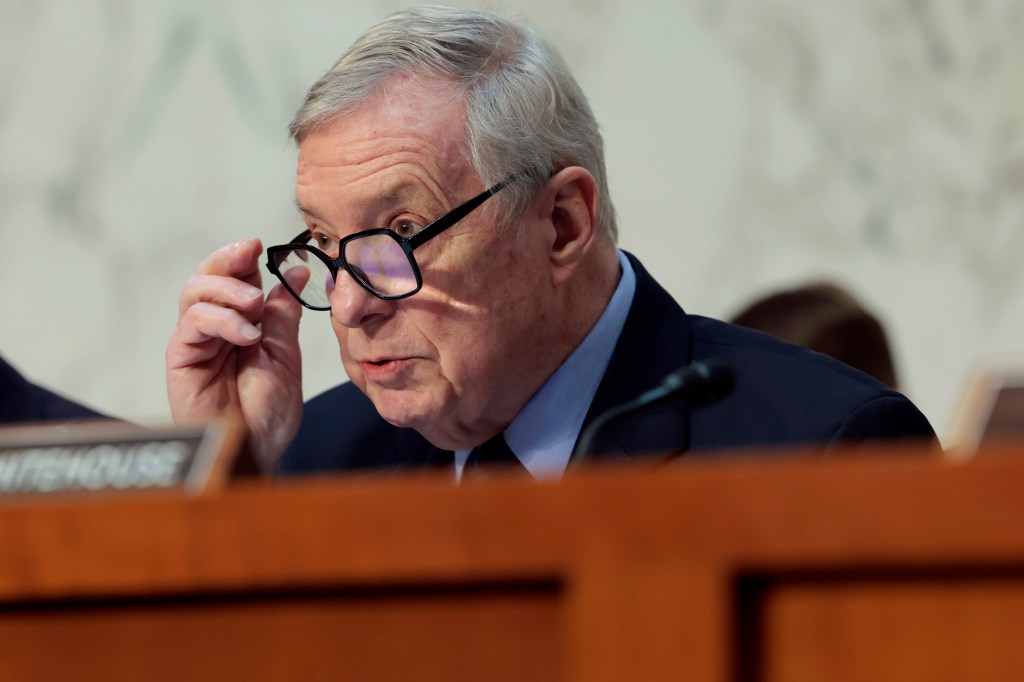

Earlier this month, a group of 14 US Senate Democrats, led by Senators Dick Durbin (D-IL), Andy Kim (D_NJ), Jeanne Shaheen, Elizabeth Warren (D-MA), Jeanne Shaheen (D-NH), and Sheldon Whitehouse (D-RI), introduced the Foreign Corrupt Practices Act (FCPA) out of concern that the Trump Administration has weakened federal efforts to combat foreign corporate bribery.
If passed, the FCPA Reinforcement Bill would increase the current statute of limitations period for violations of the criminal anti-bribery provisions of the FCPA from five to 10 years.
This means that such violations could be prosecuted 10 years from the date of the last act required to complete the crime or violation.
Let’s take a closer look.
US leadership against corruption
The extension of the statute of limitations is intended to signal to companies that even if the Trump Department of Justice (DOJ) is not prioritizing FCPA cases, violations committed today could still result in prosecution under a future administration.
To that end, the sponsors of the bill state this in their press release: “To address that perception and signal that bribery could well be prosecuted later even if it is presently outside of DOJ’s narrowed focus, the FCPA Reinforcement Act would extend from five to 10 years the statute of limitations for criminal violations of the three anti-bribery provisions of the FCPA. If not renewed, this extended statute of limitations would sunset eight years after passage, having provided two future administrations with additional opportunity to conduct expeditious investigations and prosecutions for offenses committed during the present term.”
As Foreign Relations Committee Ranking Member, Senator Warren, alluded in the release, the legislation is intended to encourage businesses to stay vigilant in this arena, “despite President Trump’s disregard for countering a range of financial crimes and his disdain for the Foreign Corrupt Practices Act.”
Sunset clause and tolling
The FCPA has a three-year tolling of the statute of limitations that is already available to prosecutors for official foreign evidence requests; this means the total window for prosecuting FCPA anti-bribery violations could extend to as long as 13 years under the FCPA Reinforcement Bill, because the DOJ attorneys get extra time to collect that overseas evidence.
And, as noted above, the FCPA Reinforcement Bill includes an eight-year sunset clause, providing that its 10-year statute of limitations period would revert back to the original five-year statute of limitations period after eight years, unless extended further.
While we’re talking about timing, it’s important to note that this proposed law’s changes to the FCPA’s statute of limitations would not be retroactive. So, if the statute of limitations period has already expired on a potential violation on the date this bill is passed, that violation is not suddenly given any additional time.
Message to corporate compliance
The central message to compliance here is that Congress will try to do its part to make businesses revisit any decision made to retreat from or forget about FCPA compliance policies, procedures, and controls. (If there was any retreat by any companies, which was likely limited, since the current statute of limitations for the FCPA at five years would extend into another administration anyway, which compelled businesses to stay mindful of this corruption risk.)
Obviously, this bill adds time that extends into a successive administration, so the timeframe widens, adding to the business incentive to be vigilant if it is passed.
The effort of trying to get this legislation passed does another thing: It sends a signal as to what Democrats could do if they take full control of Congress after the midterm elections in November (it has basically no chance of being passed without that happening) and of what a Democrat-led Congress and DOJ in 2028 could accomplish.
And, at the very least, it merely reminds businesses of their FCPA compliance training initiatives and messaging, which might have gotten less attention in the last year and three months.
Indeed, there were some convictions and fines from DOJ, but the numbers have been down significantly when compared to the last 10 years.
And, by the way, at the SEC, “there were zero civil enforcement actions brought in all of 2025 and the SEC’s unit responsible for FCPA enforcement was effectively disbanded with the departure of its leadership and delisting as a specialized unit under Chairman Atkins.”
Some cases brought by the Biden administration were even dismissed.
Context
Remember the 118-day pause to the FCPA announced in February 2025? The Trump DOJ paused FCPA enforcement to review the landmark 1977 law (citing concerns over its effect on American competitiveness) and then in early June announced it would narrow its enforcement.
The more narrowly tailored enforcement focus is on certain types of misconduct, such as activity that harms US firms’ ability to compete with foreign rivals, involves key infrastructure or is tied to operations of a cartel or transnational criminal organization.
The law has served as the linchpin of US efforts to combat corruption in civil and criminal matters, paving the way for other foreign bribery regimes such as the UK Bribery Act of 2010, France’s Sapin II law, Australia’s Criminal Code Act of 1995, Brazil’s Clean Company Act and a legally binding international treaty, the Organisation for Economic Co-operation and Development’s (OECD’s) Anti-Bribery Convention of 1997.
Foreign bribery laws, obviously not unique to the US, do this: Shift to “unacceptable” from the norm a practice of accepting “grease payments” to secure contracts, gain financially lucrative perks or preferential treatment in the race to secure business with government-owned enterprises outside of the US.
Its reach is large, as the FCPA allows the US to prosecute foreign companies that trade on US exchanges or use US channels, making it a critical enforcement tool globally.
Far more recent legislation, like the Foreign Extortion Prevention Act of 2023, allows the US to prosecute foreign officials who demand or accept bribes, targeting the other side of the transaction.
Enforcement actions have prompted companies to not only fix the compliance issues that led to bribery, but to take a strong look at its ability to surveil for a range of misconduct by its staff, subsidiaries, contractors, and business partners, who it hires and trains to conduct overseas transactions, and how those transactions are recorded and monitored.
But the effectiveness of the law depends on a number of things, including the political will to enforce it. With that said, political will is just one ingredient. News about grease payments to foreign officials overseeing repressive government regimes is not reputationally enhancing, and foreign bribery issues often signal other entrenched compliance deficiencies.
If the US DOJ and SEC have taken their foot off the pedal with FCPA enforcement, this type of congressional initiative at least strives for a deterrent effect, putting the topic back into the public forum and signaling future congressional and administration priorities, hoping companies revisit those FCPA compliance protocols.