





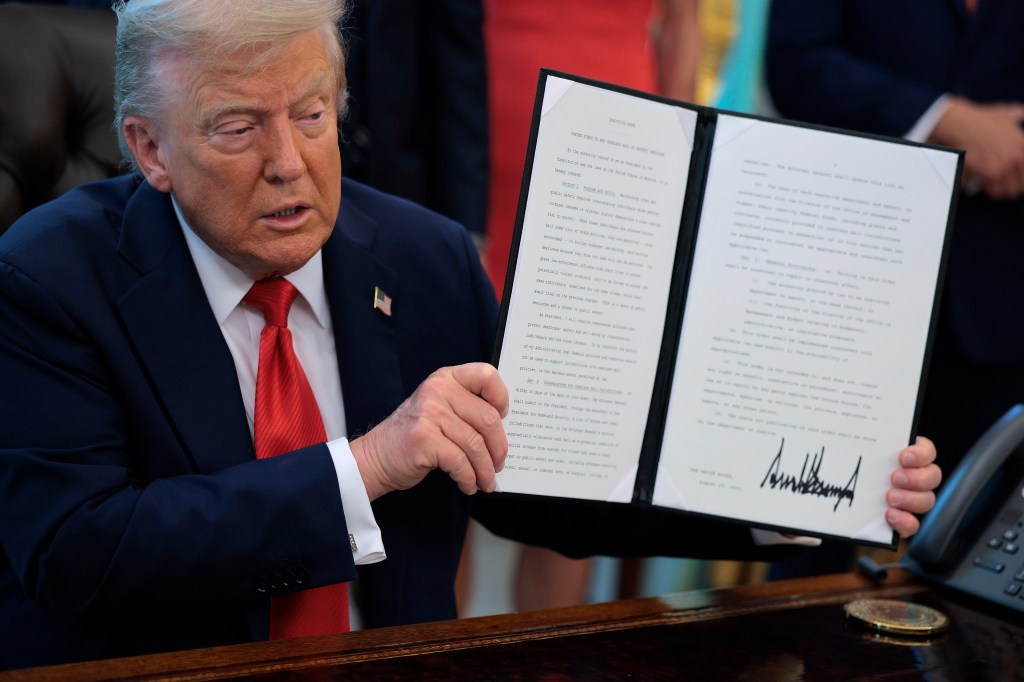






President Trump’s Cyber Strategy for America document, released last Friday, revolves around the themes of technology (especially AI) sovereignty, keeping compliance obligations lighter and more manageable to foster innovation, and building new, homegrown skillsets.
The White House released this document along with a new executive order on the same day entitled Combating Cybercrime, Fraud, and Predatory Schemes Against American Citizens. (But in all caps, of course.)
America first
A document was similarly submitted by President Biden in his term in office in 2022, but President Trump’s is only five pages long compared to Biden’s 35.
The Trump document starts out with a patriotic call to arms to defend American interests in cyberspace. The recent military action targeting Iran, the seizure of Nicolas Maduro in Venezuela, and ongoing seizures of online scammers’ networks and stolen money are cited as evidence of President Trump’s intention to defend US interests in cyberspace.
He then lists the six pillars of action that underpin the new cyber strategy. It directs the US Attorney General to give priority to prosecutions of cyber-enabled fraud and orders the US State Department to pressure foreign governments to combat cyber gangs (criminal networks targeting individuals and businesses) within their borders.
The order significantly emphasizes US interagency collaboration.
Shape adversary behavior
Here Trump mentions the importance of the government and private sectors working together.
“American citizens, companies, and our allies should not have to fend off sophisticated military, intelligence, and criminal adversaries in cyberspace alone. We will deploy the full suite of US government defensive and offensive cyber operations. We will unleash the private sector by creating incentives to identify and disrupt adversary networks.”
He mentions the cost and responsibility for doing this on a global scale must be shared among the US and its allies.
Promote common sense regulation
“We will streamline cyber regulations to reduce compliance burdens, address liability, and better align regulators and industry globally,” he states. This statement aligns with the administration’s push for a national policy for AI (in lieu of a patchwork of state regulations) and its implementation of a “10-to-1” initiative, requiring agencies to eliminate 10 regulations for every new one issued.
Modernize and secure federal government networks
“We will work to adopt AI-powered cybersecurity solutions to defend federal networks and deter intrusions at scale. Working across the government to modernize and create competitive procurement processes, we will remove barriers to entry so that the government can buy and use the best technology.”
The US government has been partnering with an array of large tech firms, but its recent spat with US-based AI company Anthropic over limits on the US military’s use of AI has created “major uncertainty for tech companies working with the government” in recent days. And Anthropic, the company behind the popular large language model Claude, is taking the administration to court for being designated by it as a risk to the military supply chain.
Secure critical infrastructure
Trump mentions protecting critical infrastructure, specifically mentioning US energy grid, financial and telecommunication systems, data centers, water utilities, and hospitals, and zeros in on doing it with homegrown solutions: “We must move away from adversary vendors and products, promoting and employing US technologies.”
Sustain superiority in critical and emerging technologies
Trump says: “We will secure the AI technology stack – including our data centers – and promote innovation in AI security. We will swiftly implement AI-enabled cyber tools to detect, divert, and deceive threat actors.”
This sounds great, but one has to wonder how it synchs with his administration’s budget and staffing cuts to the Cybersecurity and Infrastructure Security Agency (CISA) and other federal offices that play a role in the research, development, and training elements of this American cyber toolbox.
Perhaps funding is coming, though, as the new executive order calls for the Homeland Security Department to provide training and “resilience building against cyber threats” to US state and local government agencies.
Build talent and capacity
“We will eliminate roadblocks that prevent industry, academia, government, and the military from aligning incentives and building a highly skilled cyber workforce. We will harness the existing resources, authorities, talents, and ingenuity that make America great.”
Again, it’s not evident how this aligns with the Trump Administration’s budget cuts at CISA and the Office of the National Cyber Director.
The bipartisan Cyberspace Solarium Commission, created by Congress in 2019 and tasked with developing a national strategy to defend the country against major cyberattacks, has “urged the administration to strengthen the authorities of the Office of the National Cyber Director, restore cyber diplomacy funding and personnel at the Department of State and rebuild CISA.”