

Skip to Primary Navigation

Critical minerals, energy storage, and international collaboration

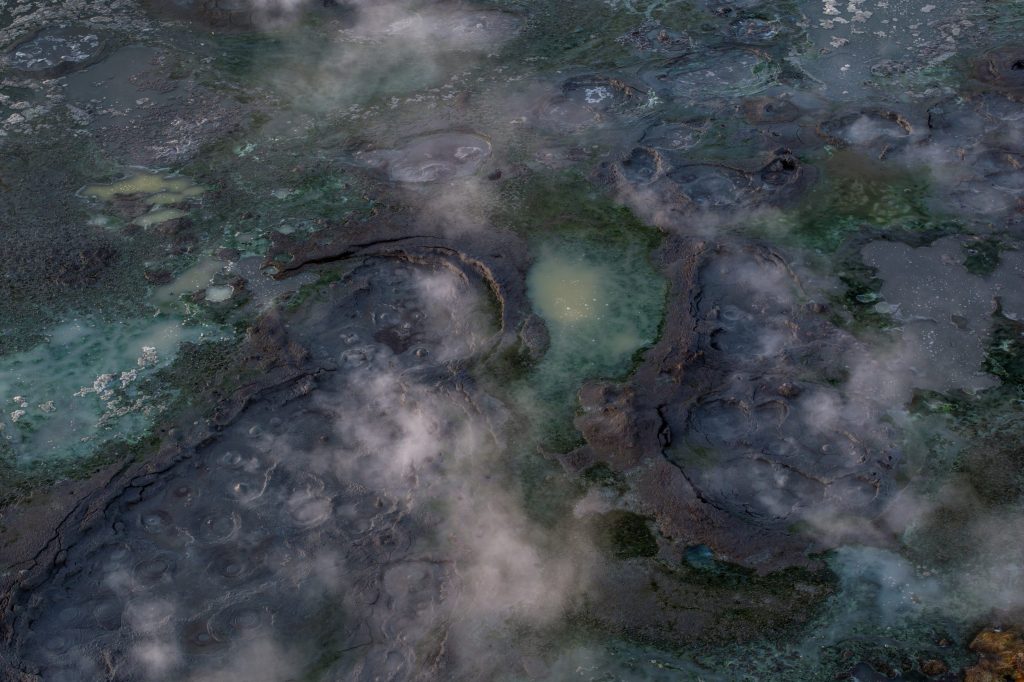
In an aerial view, steam rises from fumaroles, or steam vents, situated between two of the five Salton Buttes lava dome volcanoes that line the southeastern edge of the Salton Sea and are heated by magma under the Salton Sea Geothermal Field on February 14, 2024 near Niland, California. Geothermal plants nearby create steam power from boiling, mineral-rich brine drawn from deep under geothermal fields. A race is on to develop processing to separate raw lithium out of the waste stream to be used in the production of batteries for electric vehicles. This geothermal field at the eastern edge of the Salton Sea has is being called the future "Lithium Valley", with the potential to extract 18 million metric tons of lithium from this geothermal field, roughly the equivalent of 382 million electric vehicle batteries, according to a report by the Lawrence Berkeley National Laboratory. The area is believed to have the world's highest concentration of lithium contained in geothermal brines.
Photo: David McNew/Getty Images

At a recent conflab on critical minerals, speakers noted how Canada, sometimes in partnership with the US, is using the resources to support energy grid resilience.

A recent industry event on critical minerals and their strategic and competitive use within Canada, as well as globally, delved into the topic of energy storage as critical infrastructure.

Energy storage is emerging as one of the largest and most durable sources of demand for minerals such as nickel and