

John Higgins and Maria Symeon share practical advice on documenting oversight, managing delegation, and evidencing challenge.

Records required include those on the business and internal organization of the firm as well as all services and transactions undertaken by it (SYSC 9.1.1A(1)).
Generally, the records must be retained for as long as is relevant for the purposes for which they are made (SYSC 9.1.5).
A common platform firm or must retain records related to its MiFID business for a period of at least five years (SYSC 9.1.2).
The same five-year retention period applies to a firm distributing insurance-based investment products though COBS 9A.4.3R and COBS 10A.7.2AR requirements mean that the records may need to be held for a longer period (SYSC 9.1.2).
Generally, it must be possible to reproduce the records on paper and in English (SYSC 9.1.4).
If a record is not in English it can be retained in that language, however a translation should be provided on request (SYSC 9.1.4).
If a record relates to business conducted outside the UK, the official language of the country in which the business is undertaken can be used (SYSC 9.1.6A).
In connection with records for a non-MiFID business, a firm must have appropriate systems and controls in place that ensure the security of and access to the records. (SYSC 9.1.5)
John Higgins and Maria Symeon share practical advice on documenting oversight, managing delegation, and evidencing challenge.
The FCA plans to extend the High-Level Standards in the FCA Handbook to cryptoasset firms in line with FSMA-authorized entities.

Study reveals picture of uneven compliance and continued breaches by senior staff.

The Citi case highlighted compliance deficiencies compounded by human error. Here are some practical tips to avoid making the same mistakes.
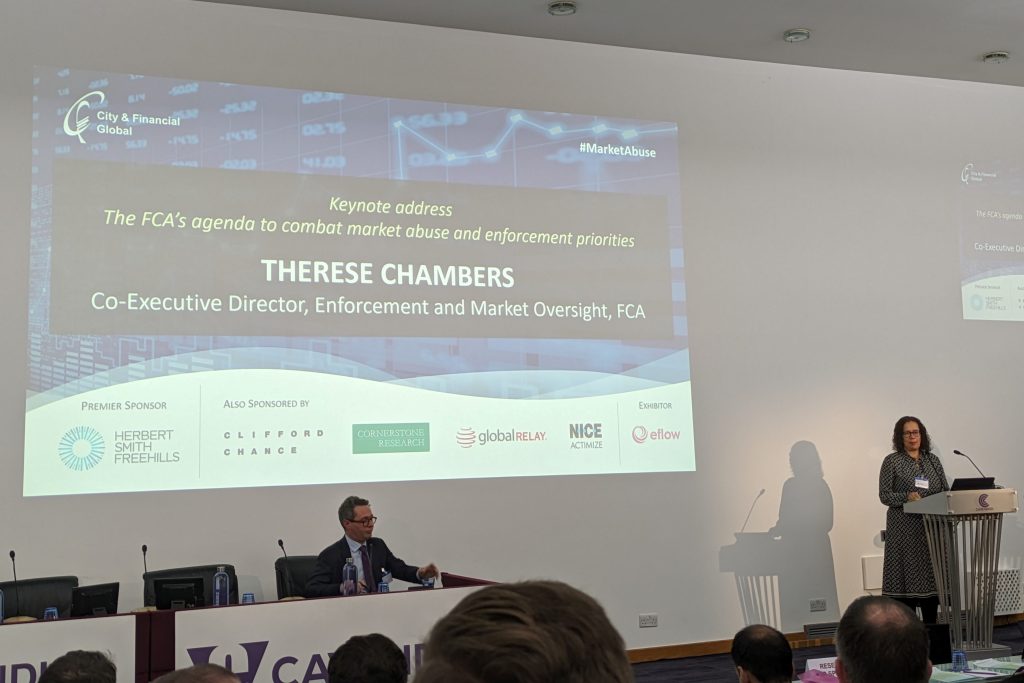
Therese Chambers outlined new enforcement strategy to speed up investigations and clarified new enforcement publicity proposals.
Now that the cap has been removed, we look at the practical implications for banks, building societies and PRA-designated investment firms.

If your firm is subject to one or multiple regimes, you should ensure your controls and approach are aligned with the relevant regulators’ expectations.
The judgment is critical of the FCA's conduct of the investigation and enforcement processes.