

The Government of British Columbia is positioning the province at the forefront of the global clean energy transition through its Critical Minerals Strategy, launched to strengthen sustainable resource development and investment.
Central to this effort is the Critical Minerals Office (CMO). It acts as a dedicated hub supporting projects across the entire value chain, from exploration to value-added production, that contribute to a low-carbon future. Working closely with industry, unions, investors, and First Nations, the CMO aims to attract capital, accelerate permitting processes, and align provincial and Indigenous priorities.
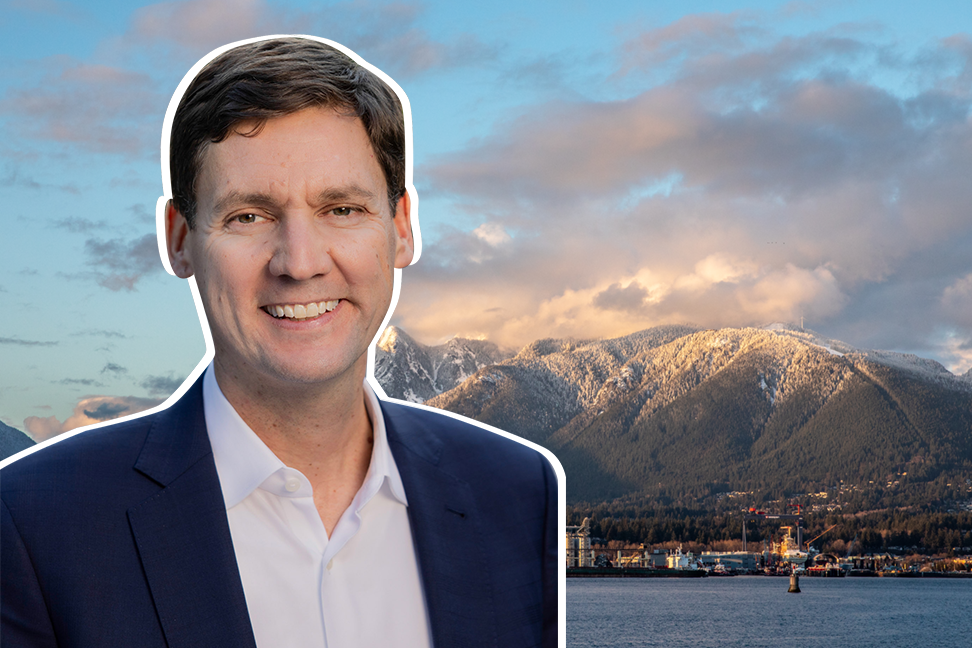
GRIP Senior Reporter Vlada Gurvich spoke with Premier David Eby to learn more about British Columbia’s sustainability efforts and how these intersect with its Critical Minerals Strategy.
Vlada Gurvich: The first question I’d like to start with is what incentives and programs the BC government is offering to attract sustainable finance and investment. I’ve read quite a lot on your website, and there are so many great initiatives. As a fellow human rights lawyer who has followed your work on labor rights, I’d love for you to comment on the job creation prospects connected to these initiatives.
David Eby: Right now, although there’s significant political pushback in some places against climate action, in British Columbia we understand that reducing carbon emissions and ensuring sustainability are essential to our future as a province, as a country, and for the world. For us, economic development and prosperity cannot be separated from addressing climate change. We’ve seen the impacts firsthand: forest fires, ocean acidification, overwintering pine beetles, and more.
People in British Columbia want us to continue leading on climate, but they also want to be able to pay rent, support their families, and enjoy a good quality of life. These priorities are all interconnected.
Our work to support sustainable finance and investment focuses on promoting industries that help us achieve our climate goals while also growing the province’s prosperity. A good example is the critical minerals sector. These metals and minerals are essential to the global transition to low-carbon energy, and we have them here in BC. We’re supporting the sector through initiatives like the electrification of mines, which lowers emissions and operating costs. It is a win-win for both climate and economic development.
We’re also providing direct support to other sectors: for example, equity lines that enable First Nations to participate in major projects, and grants for companies developing value-added products from sustainable resources like BC wood. We’re constantly looking for ways to expand and strengthen sustainable industries across the province.
Vlada Gurvich: My next question is about the Critical Minerals Strategy. I would like to know how this strategy intersects with federal and international regulations to ensure a coordinated approach.
David Eby: With the recent change in the federal government and the new prime minister, we’re aligned on several key priorities. One is diversifying our markets to reduce dependence on the US, which has been challenging at times. Another is ensuring long-term sustainability.
The federal government’s Major Projects Office has identified the northwest of BC as a crucial national project area for producing critical metals and minerals in a low-carbon way while also protecting wild spaces and supporting economic development in a region that has faced economic hardship. This approach advances prosperity, lowers emissions, and preserves natural areas for future generations.
We’ve aligned our provincial priorities with the federal agenda, coordinating through the Major Projects Office and other programs. That’s just one example of how we’re working together to responsibly develop the province’s resources.
Vlada Gurvich: That’s amazing, thank you. This next one is closer to my own background in human rights and supply-chain law. Can you tell me about the measures that the BC government is taking to ensure responsible sourcing and mitigate risks in the critical minerals supply chain?
David Eby: Frankly, we’re a bit frustrated by the global commodities system. There’s very little traceability. When BC produces copper, molybdenum, or germanium, it all goes into a global commodities pool that doesn’t differentiate between producers based on carbon emissions, pollution, or human rights practices.
To address this, we’ve supported the establishment of an ESG governance office through several post-secondary institutions in the province. The goal is to research and promote best practices for traceability and advocate for greater transparency in global supply chains. We want to ensure that commodities produced with a lower carbon footprint, in partnership with First Nations and with strong environmental protections, are recognized and rewarded in the marketplace.
We see carbon border adjustment mechanisms and initiatives like the London Metal Exchange’s low-carbon metals tracing proposals as steps in the right direction. BC aims to be a leader in this shift. With our technology, affordable clean electricity, and high human-rights standards, we’re already globally competitive, but if markets start accounting for carbon and ethical sourcing, our advantage becomes enormous.
Vlada Gurvich: That’s incredible. It sounds like there’s so much potential to expand these opportunities. You’ve already touched on this a bit, but could you elaborate on how the BC government is integrating ESG principles into its critical minerals policies? What role do existing programs play in promoting sustainable development?
David Eby: One of the most effective ways for us to meet our environmental and climate goals is to electrify as much industry as possible. Through BC Hydro, we’ve issued calls for clean energy projects. Ten projects have already been approved, nine of them majority Indigenous-owned, which directly supports our social and governance objectives.
We’ve also launched a second call for firm power projects, including hydroelectric, geothermal, and tidal energy. This massive expansion of clean electricity, built in partnership with First Nations, helps us achieve zero-carbon growth while giving companies the power they need to reduce emissions and operating costs.
We see these win-win scenarios, where environmental, social, and economic objectives align, as the cornerstone of our climate, human rights, and prosperity goals in BC.
Vlada Gurvich: Thank you so much. I just want to say that I’ve worked in ESG for quite some time, and usually the letter E is huge while the letter S tends to get lost. I really admire how you’ve managed to keep both environmental and social goals in balance. It’s such a difficult equilibrium to achieve.
David Eby: Thanks for your interest. I really appreciate that.