
Sara Malmgren on rethinking cybersecurity in an evolving threat landscape
Lawyer Sara Malmgren reflects on growing cybersecurity challenges, evolving compliance strategies, and changing regulatory expectations.

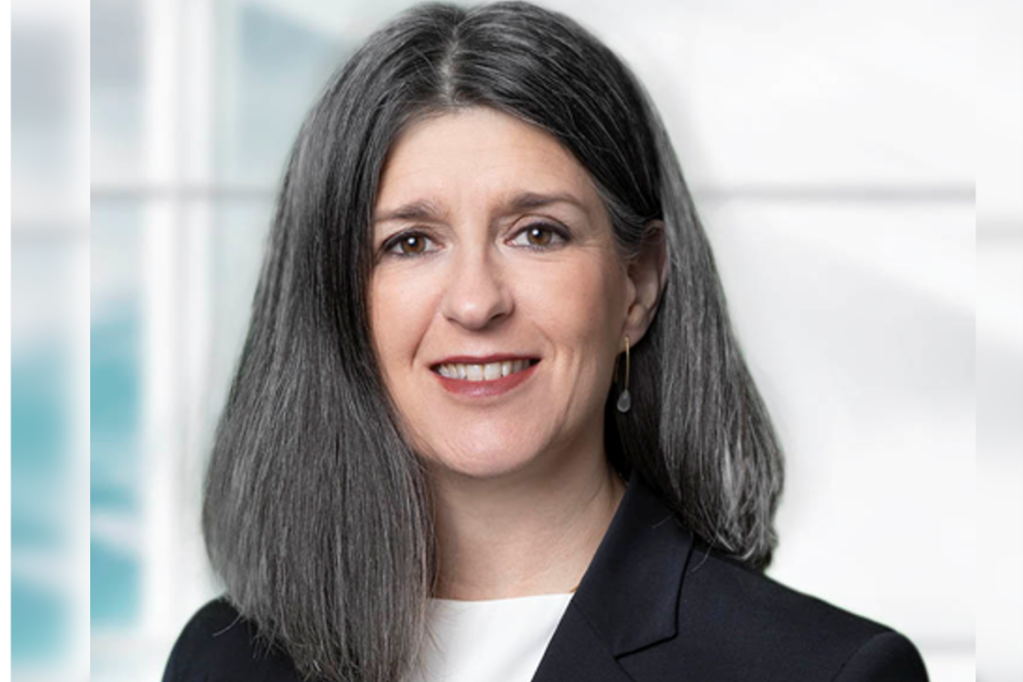
Sara Malmgren is a lawyer and Partner at Eversheds Sutherland Sweden, leading the IT and Information Security Team, where she also serves as CISO. She has more than 25 years of experience advising domestic and international clients on IT, privacy, cybersecurity, information security, and complex commercial matters. Sara is also responsible for maintaining the firm’s ISO 27001 certification, giving her practical insight into information security governance, risk management, and compliance.
Could you tell us more about your professional background and how your work in IT law and cybersecurity has evolved.
Sara Malmgren: “I started out at a law firm, focusing mostly on commercial law and helping clients with IT questions, and soon shifting to IT infrastructure as well as internet and DNS-related questions. I have been working in the field for 26 years now. Throughout the years, I have been fortunate to meet brilliant clients working in tech and security-heavy sectors and have learned so much in the process.
“Today, I am a Partner at the law firm Eversheds Sutherland, heading the IT and information security team in the Stockholm office. I was responsible for the implementation of the firm’s ISO 27001 certification and three years ago, we became the first law firm to be certified by a Swedish certification body. As part of that work, I also serve as the firm’s CISO.”
If you compared the situation now to the earlier days, how have your client engagements changed?
“The regulatory developments in recent years have quite significantly influenced the types of engagements. In the early 2000s the focus was mostly on commercial aspects of contracts. Then the next big shift came with GDPR around 2018, and ever since it has been a lot of advisory work related to new legislation from the EU and compliance, paired with commercial aspects of contracts.
“Thanks to GDPR, the security of personal information became part of the agenda and discussed at a high level in companies. Because of that, many companies leveled up their work in personal data security – but the added benefit led to other data becoming more secure than it was before GDPR.
“In the last two years, a lot of the focus has shifted to information security and cyber security in a wider sense, again in relation to new regulatory regimes. I believe – and hope – that, just like GDPR and personal data, these matters are gradually becoming high-level discussion topics.”
How have cyber security and information security-related risks evolved following the rapid AI adoption? What should companies pay attention to today?
“AI has been extremely interesting due to the quick pace of developments. From a regulatory and risk perspective, we have seen a changing landscape that is constantly on the move. At the beginning, the questions that companies were asking were more related to building the business and seizing AI predominately from the commercial aspect.
I think many organizations have been too naïve about understanding their own risks, and that regulation will contribute for companies to systematically work with cybersecurity.
"Rather quickly right after, it became clear that the use of AI also brings risks, with the first step in the risk analysis being the risk of losing information. So, the imminent question became: if we use AI, are we exposing our information in any way?
“Today, just from the recent cybersecurity events involving AI, we can note an explosion of cybersecurity incidents. These developments also change the questions that organizations face, shifting from the risk of losing information by using AI in “the wrong way” – for example, prompting an open system using sensitive information – to technical vulnerabilities when using and implementing AI tools.
“At the same time, AI is also increasingly opening more possibilities for cybercrime and lowering the bar for those that engage in such activities by making it much easier to exploit vulnerabilities, simplified by the enablement of cybercrime “services” being professionalized and purchased.
“The commercial aspects of AI are high on the agenda, as there is a lot of willingness among organizations to find the upside of AI. Here it is important for organizations to consider the return on their investment and the problem that they wish to solve instead of just pushing for any AI solution.”
Where do you often see a “theory v practice” clash in terms of gaps between organizations’ formal policies and managing AI and technology risks in practice?
“While the security risks of AI have become more prominent, AI is also used as a defense tool against hostile attacks. This duality then translates into a much broader cybersecurity question, one that organizations can address more thoroughly and motivated by recent regulatory demands, such as NIS2.
“I think many organizations have been too naïve about understanding their own risks, and that regulation will contribute for companies to systematically work with cybersecurity. And that is not just AI – AI is in this case the wet blanket over everything simply because the risks you’ve had before are much more imminent and the vulnerabilities are easier to explore.
“It is very good if organizations have policies stating which AI tools can be used, which information can be shared, and what can and cannot be done. But policies that say “do not click a suspicious looking link” will be futile if there is no proper culture working with security in the organization – the lack of security culture is a risk in itself.
I strongly believe that organizations need to have a crisis group in place that is equipped to step in when incidents happen, spanning from HR, legal, communication, finance, and management.
“The biggest issue to digest is that we, the people, are the biggest challenge – we are the ones allowing hackers to get access to our systems by (unintentionally) taking a wrong step which brings consequences. As part of the security culture in an organization there should also be a backbone reflex with employees reflecting if what they are about to do should be done at all, as well as increased attention on employee awareness training regarding cybersecurity.”
How should cybersecurity culture be approached in an organization?
“Security culture is a major issue and should be something set from the top, from management, and trickling down. It cannot be something that the IT department takes care of, simply because the IT department holds responsibility for the IT and technical aspects, but there are also organizational, physical, and personal/human aspects to cybersecurity.
“I strongly believe that organizations need to have a crisis group in place that is equipped to step in when incidents happen, spanning from HR, legal, communication, finance, and management. When an incident happens, you need business continuity but also a response plan – as soon as there is a vulnerability which is known, it is known not only to the organization but also to criminals.
“And for that to happen, you need to have every aspect of the organization on board – the CEO and CFO for quick and maybe costly decisions, HR as it may affect employees, legal to mitigate legal risk and ensure proper reporting process if needed, and finally communication professionals, to ensure quality in all communications.”
In recent years, operational resilience and cybersecurity have increasingly captured the attention of regulators, including through DORA, CRA, and NIS2. In the context of cybersecurity risks, is compliance a sufficient security strategy? Can companies learn from each other or are most risks sector-specific?
“I think a holistic view is necessary. If organizations focus on being compliant, it sounds more like a tick-box exercise. Instead, organizations should focus on why they need to be compliant.
“The risks are rather similar to each other even if we are referring to different organizations, as the main way of thinking around the risks is roughly the same. The regulatory requirements can vary with, for example, more detailed requirements under DORA than under NIS2, which brings more of a helicopter perspective across critical sectors.
There is also a commercial risk in not ensuring a proper cybersecurity approach as a cyber incident can be costly.
“The financial sector is built on an organization ready for compliance, given the extensive regulatory requirements the sector has faced for a long time. For other companies, such as in the technology sphere, these requirements and expectations are newer.
“But the sectors can learn from each other, and organizations, in my view, should inform and share information when incidents happen, even if they are not in scope of DORA and NIS2 and therefore are obliged to report.”
Sweden and the rest of the Nordic countries are associated with high digital maturity and openness to innovation. Do these factors translate into stronger cyber security and information security management?
“Sweden is a truly IT-innovative country, but I would not say that the high entrepreneurship in this area automatically means superior cybersecurity approach. Security is not always on top of mind when building a company, but I think that this culture is changing, not least due to the current geopolitical situation.
“There is also a commercial risk in not ensuring a proper cybersecurity approach as a cyber incident can be costly. On the flip side, there are many brilliant minds and innovators within the cybersecurity area – I am very impressed by the maturity of many of the young innovators that I am meeting, and their consideration of security, environmental, and other important aspects of their business ideas.”
Looking into the future, which technology-related risk do you think will gain more importance?
“AI will continue to stay in focus, possibly followed by quantum and other types of data computing – similarly to AI, we know that they are coming but we do not know how they will be used, and that is a risk in itself.
What do you think is the most important cybersecurity-related change that you would encourage compliance functions to make in the next 12 months?
“I would encourage every organization to go through a risk analysis, as a foundational part of ensuring operational resilience – and repeat the process continuously. Far too many organizations do not have a proper understanding of their risks, and with that they lose the ability to handle them.
“Additionally, organizations should work on ensuring business continuity, that is, knowing what to do when something happens, starting with the simple things, such as how do you call your colleague if you don’t have access to your phone or their phone number.
“Finally, there is much talk about compliance – and with a bit of a sigh as it is a heavy burden, but I wish organizations could see the benefits of their actual work with cyber resilience and the impact that will have on reducing their risks. Customers will also see it positively, as they wish to do business with companies that are mature and that take the issue seriously. Proactively working with cyber security can also be seen as a business generating opportunity and competitive edge.