









Fifteen governors just announced a coalition to coordinate public health efforts anchored around science instead of politics.
The Governors Public Health Alliance is reportedly now the biggest state-run alternative public health authority; its leaders represent nearly 130 million Americans (over one-third of the total US population).
It follows the lead of a three-state West Coast Health Alliance and a 10-state Northeast Public Health Collaborative, with the new coalition seen as complementary to the previous two.
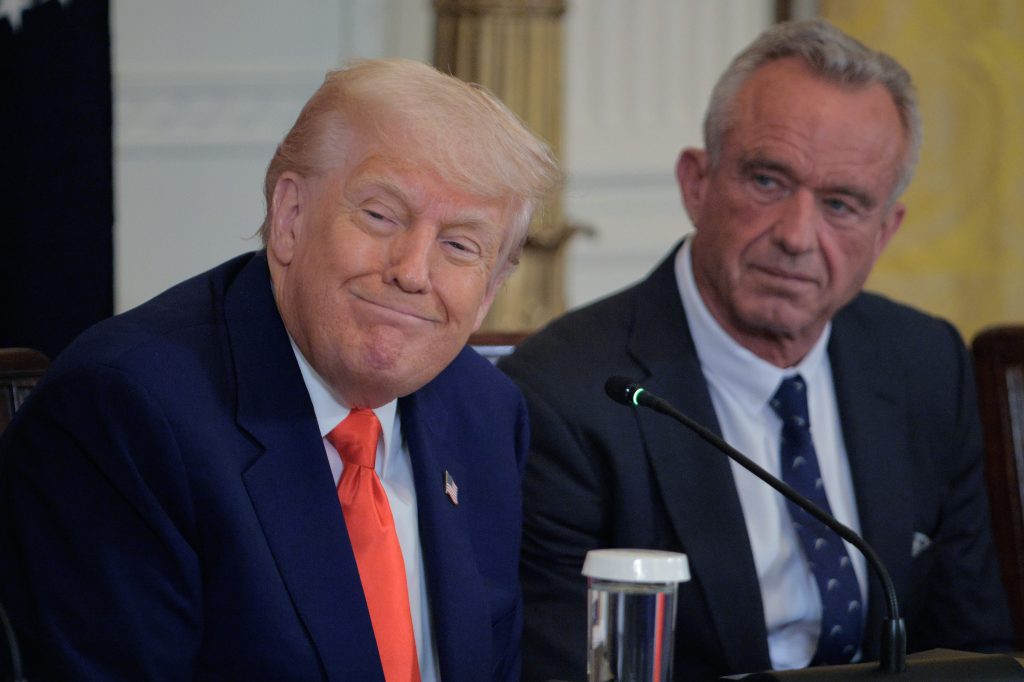
Additionally, 17 states have bypassed federal guidance and supported more access to the COVID-19 vaccine. This followed new COVID-19 vaccine guidance from the federal Centers for Disease Control and Prevention (CDC) and the Food and Drug Administration (FDA), which both are currently under the authority of US Health and Human Services Department (HHS) Secretary Robert F Kennedy Jr (RFK Jr), who is known for his controversial views of vaccinations.
Although the governors describe the effort as nonpartisan, the current alliance leaders are Democrats.
The governors noted that the coalition will share best practices and knowledge, bolster emergency preparedness, strengthen communication, and even purchase vaccines, among other supplies.
It will also aim to raise common challenges, “elevating national considerations for vaccine procurement, policy solutions and more,” according to announcements.
The regional leaders speak out
The coalition of states and territories includes Colorado, California, Connecticut, Delaware, Hawaii, Illinois, Maryland, Massachusetts, New Jersey, New York, North Carolina, Oregon, Rhode Island, Washington, and the territory of Guam.
(Interesting note: The Alliance includes Josh Green of Hawaii, the nation’s only sitting governor who is also a physician.)
New York Governor Kathy Hochul said in a statement: “From undermining vaccine access and abortion rights to slashing billions in Medicaid funding from those in need, the federal government is wreaking havoc on public health and the institutions we rely on. The Governors Public Health Alliance will allow our states to share resources, coordinate with global partners, and deploy the tools and information needed to meet public health threats and protect the American people.”
Massachusetts Governor Maura Healey said about the collaboration: “While Donald Trump and RFK Jr. turn their backs on public health, Governors are stepping up to make sure our residents have the health care they need and deserve.”
“It’s really just about public health,” commented Colorado Governor Jared Polis, according to The Wall Street Journal‘s Betsy McKay. “The more expertise that is cut from federal agencies such as the CDC and the FDA, he said, the more states will need to find ways to re-create capabilities to protect the public’s health,” reported the Journal.
And Illinois Governor JB Pritzker said in a statement: “When the federal government abandons science for conspiracy theories, slashes Medicaid, and undermines vaccine integrity, states must stand united to defend the facts.”
Guam Governor Lou Leon Guerrero said: “On Guam, we see the effects when people – especially children – are not vaccinated. We’ve had cases of measles and other communicable diseases when our neighbors from the outer islands visit or pass through Guam, and they haven’t had the chance to be vaccinated. So we know how important it is to protect access to vaccines and other public health protective measures.”
HHS responds
The Journal reported that a spokesman for HHS noted that the agency will make sure policy from the federal vaccine advisory panel (the Advisory Committee on Immunization Practices) “is based on rigorous evidence and Gold Standard Science, not the failed politics of the pandemic.”
The spokesperson also noted that prior government initiatives altered Americans’ views on public health. “Democrat-run states that pushed unscientific school lockdowns, toddler mask mandates, and draconian vaccine passports during the COVID era completely eroded the American people’s trust in public health agencies,” the spokesperson said.
Responding to concerns over the shutdown of the federal government and its consequences for public health initiatives – about 600 employees at the CDC were laid off this week – the HHS spokesperson said that “HHS continues to close wasteful and duplicative entities to streamline the agency for the American people.”
The new coalition is supported by Governors Action Alliance, or GovAct, a nonprofit initiative led by former governors including both Republicans and Democrats. (You might recognize GovAct’s Bipartisan Advisory Board of former governors, which includes Arne Carlson (R), Jim Doyle (D), Deval Patrick (D), Marc Racicot (R), Kathleen Sebelius (D), and Bill Weld (R), as well as former senior federal officials, Sally Yates and Larry Thompson.)
Public health policy
Public health matters have been a responsibility of the states since the US Constitution’s 10th amendment gave states any powers not reserved by the federal government. Now, states oversee many health-related initiatives, including vaccination programs, healthcare for the poor, water and food safety, health education, and more.
“The president can’t force someone to take a vaccine or force a state to stop fluoridating the water supply,” said Lawrence Gostin, a public health law expert at Georgetown University, to Global Health Now.
However, it is the president, given Senate approval, who chooses the head of the HHS, CDC, FDA, and others. This grants the executive branch a large influence over state-level public health initiatives. The federal government “provides a range of guidance, guardrails, and standardizations,” said Georges Benjamin, executive director of the American Public Health Association. “And it plays an enormous role in funding.”
And that funding gives the federal government sizeable influence in these public health debates.
Most likely not the intended consequence of his remarks, the Alliance could be said to reflect Kennedy’s stated position that the states should shoulder more responsibility for governance on public health matters.