

Skip to Primary Navigation

Marsalek’s missing millions: the unravelling of a secret Libyan empire

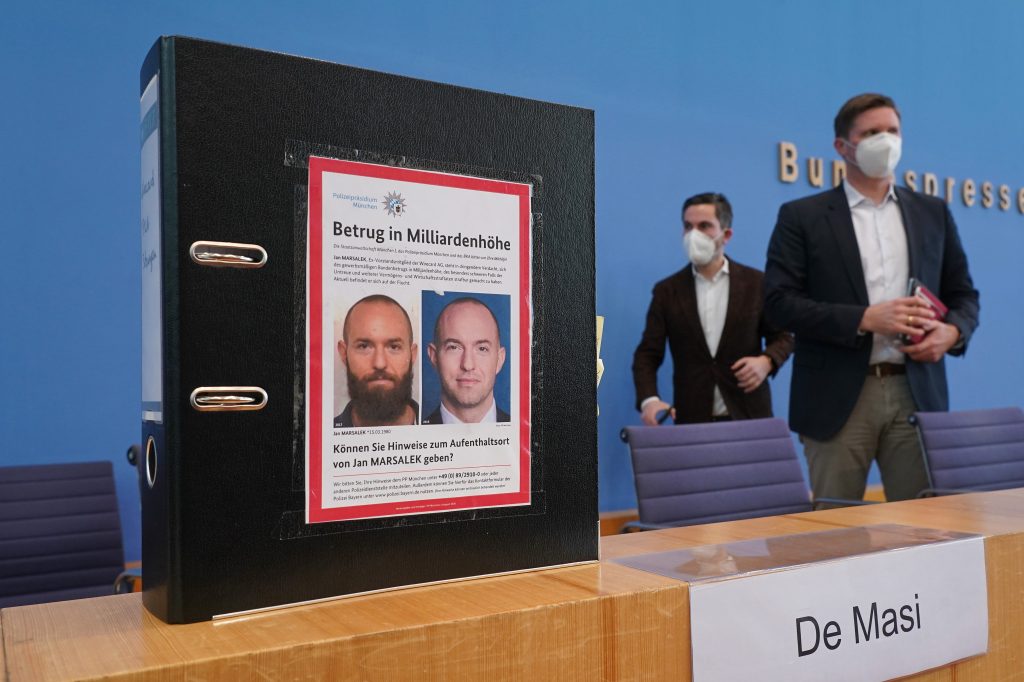
Fabio de Masi (C, Die Linke) and Florian Toncar (FDP) of the Bundestag commission investigating the Wirecard scandal prepare to depart a press conference as a police wanted poster of former Wirecard chief operating officer Jan Marsalek is seen on a folder on March 10, 2021 in Berlin, Germany. Wirecard, a German digital payments processor that was very active in Asia, declared bankruptcy last year following revelations of deceptive accounting to the tune of EUR 2 billion. Former Wirecard chief operating officer Jan Marsalek is a fugitive also being investigated for possible ties to Russian intelligence services.
Photo: Sean Gallup/Getty Images

FT investigation sheds light on Wirecard fraudster’s activities in north Africa and shadow life as a Russian agent of influence.

11 December, 2025 by Sam Jones in Vienna and Paul Murphy in London

From a townhouse in London’s Mayfair, a secret deal was sealed last year to sell three Libyan cement factories.

Hidden behind layers of offshore shell companies and non-disclosure agreements, the strategic assets passed into the hands of a

Register for free to keep reading

To continue reading this article and unlock full access to GRIP, register now. You’ll enjoy free access to all content until our subscription service launches in early 2026.

  • Unlimited access to industry insights
  • Stay on top of key rules and regulatory changes with our Rules Navigator
  • Ad-free experience with no distractions
  • Regular podcasts from trusted external experts
  • Fresh compliance and regulatory content every day