


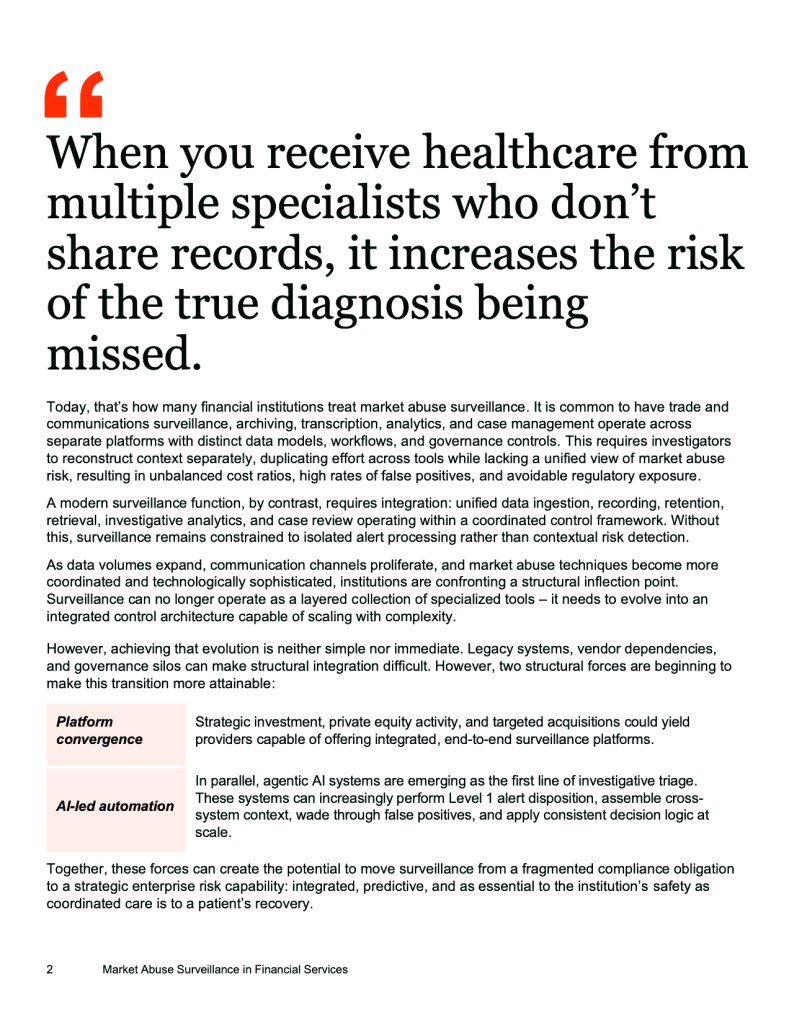
This useful report outlines how a modern surveilliance function requires integration in order to function efficiently.
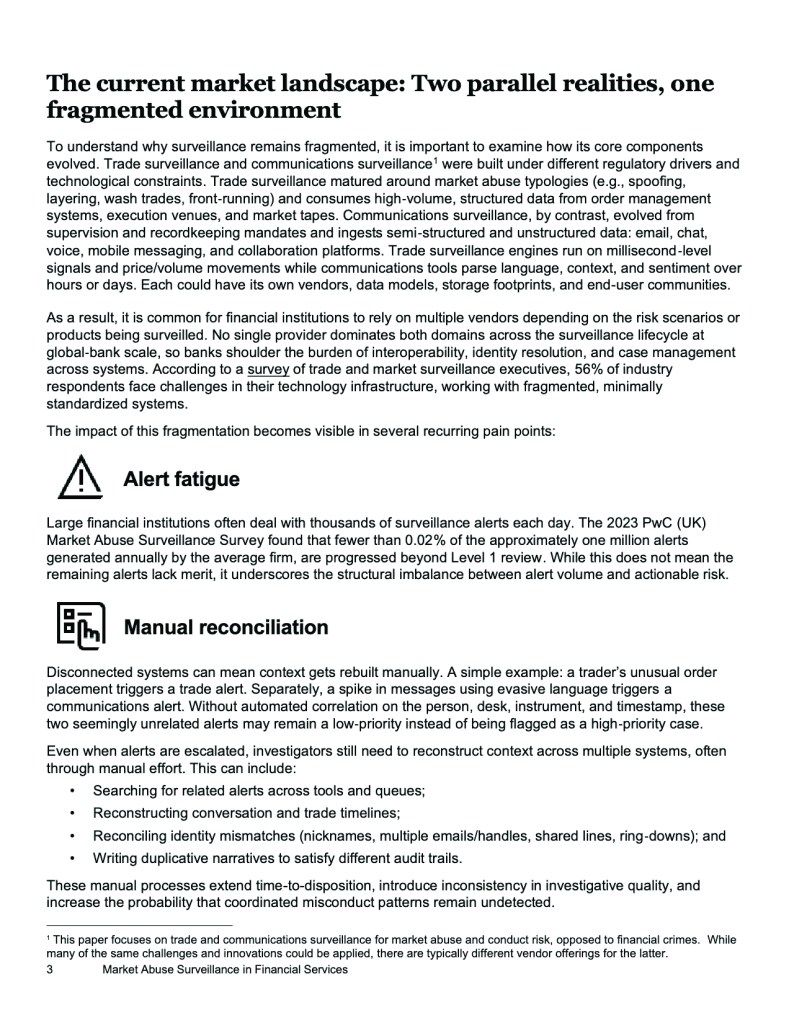
It identifies key challenges for surveillance teams stemming from a fragmented approach to surveillance including:
- alert fatigue;
- manual reconciliation processes;
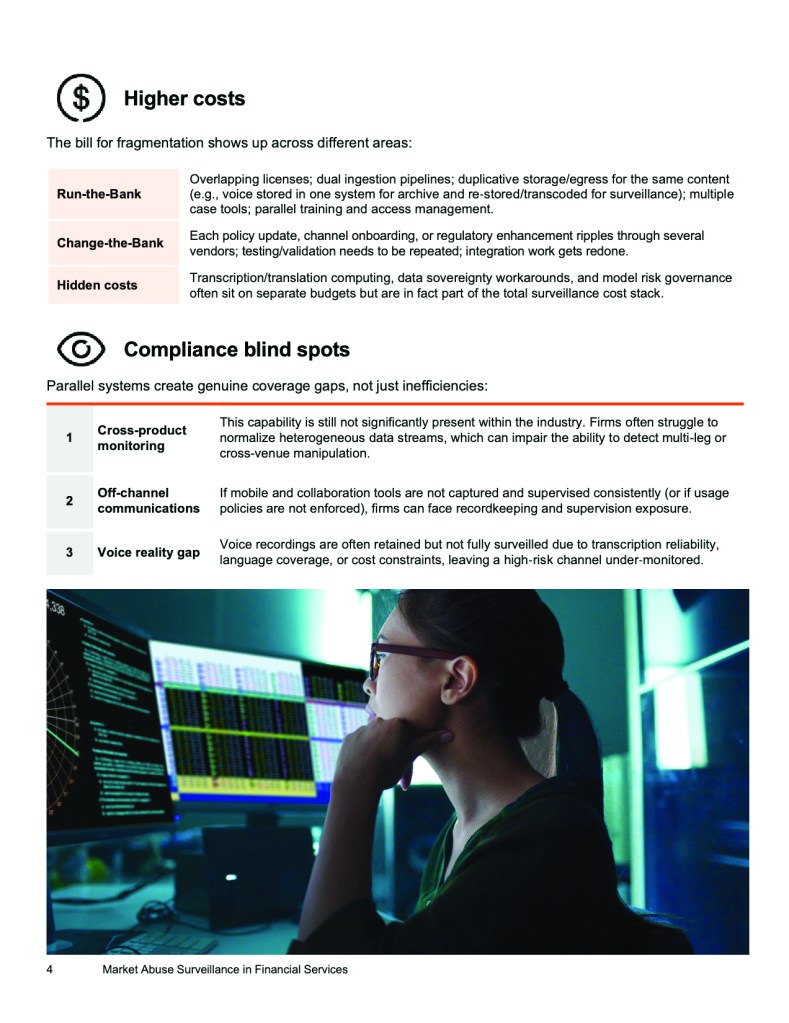
- higher costs;
- compliance blind spots.
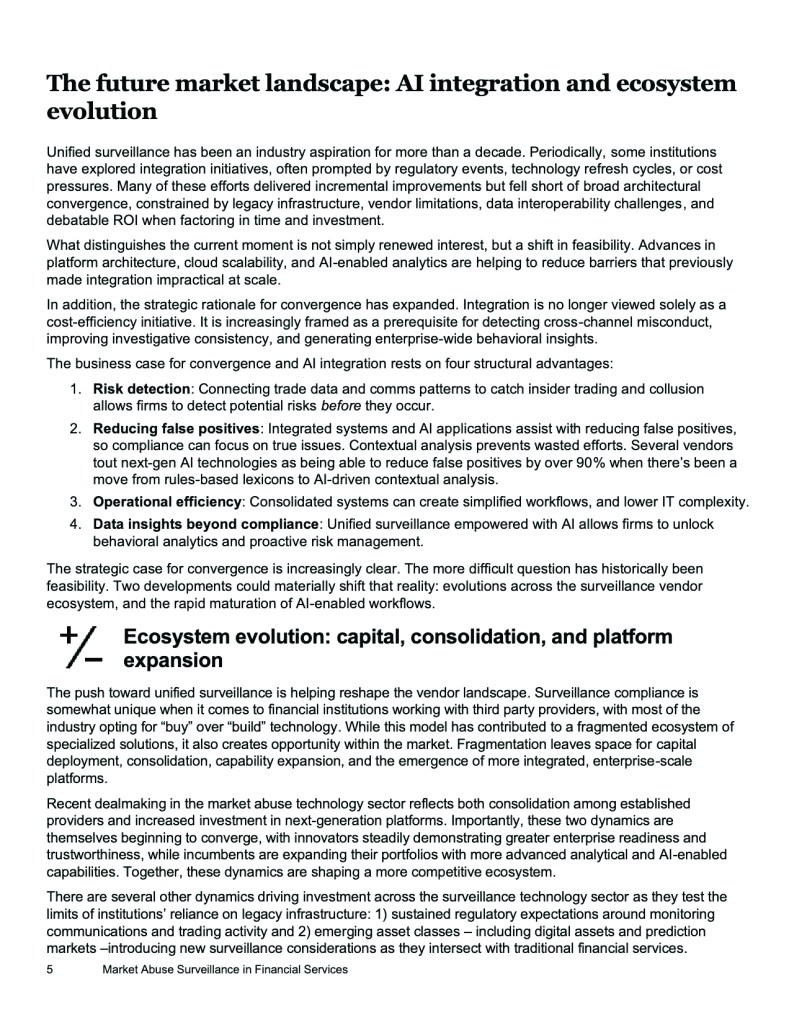
The report contrasts these issues with the structural advantages of surveillance convergence including:
- proactive risk detection;
- reduction of false positives;
- operational efficiency;
- availability of data insights that go beyond compliance use cases.
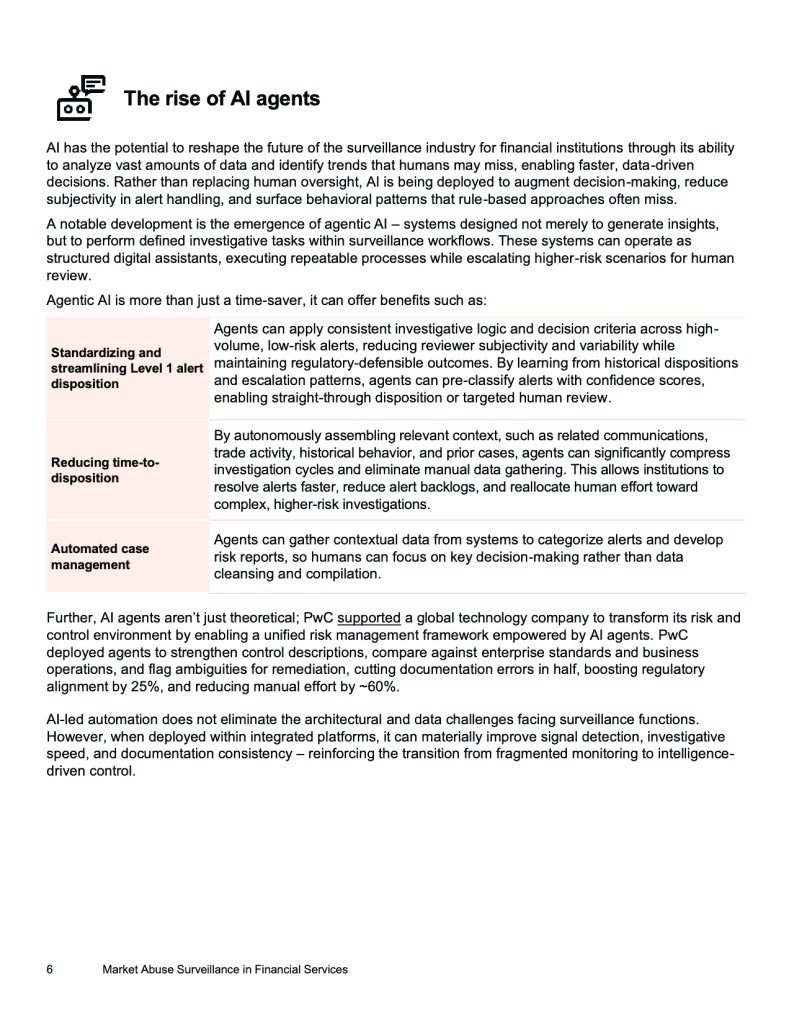
The report also contains a helpful outline of the advantages of deploying agentic AI in the surveillance context.
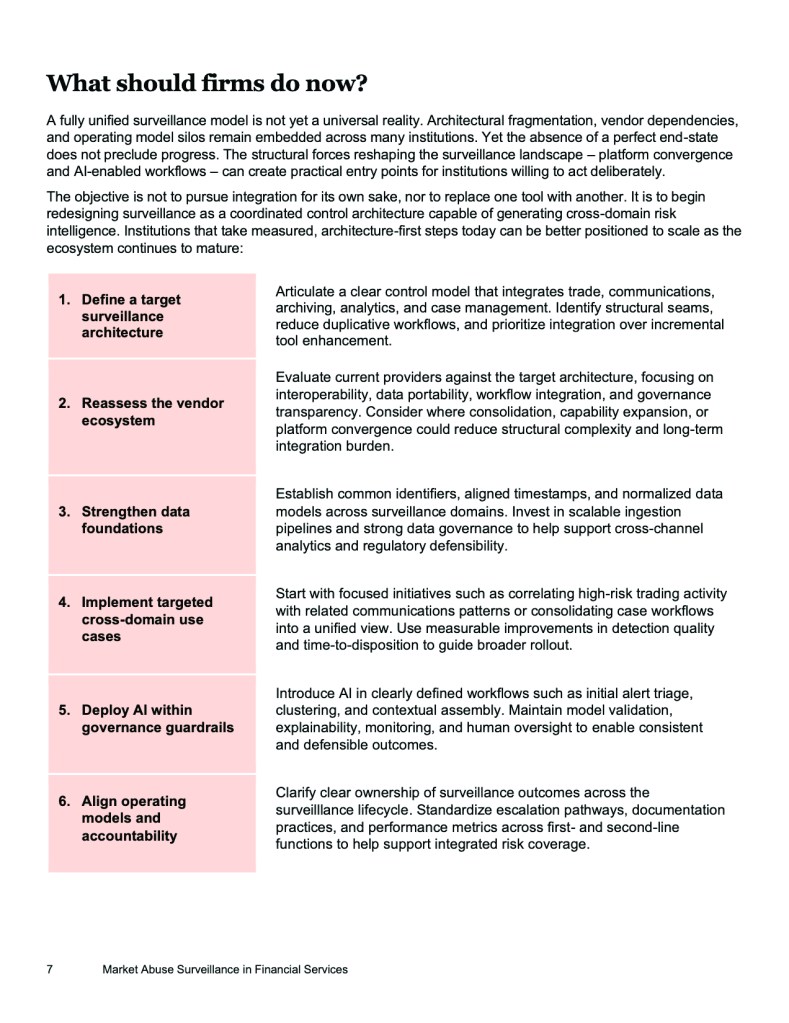
A highly recommended read for any surveillance professionals or technologists working on the implementation of surveillance tools in financial institutions. You can read the full document on screen by clicking the image below, or by downloading from the link provided.

For additional information on the Our Take series or PwC’s Risk and Regulatory Practice please contact:
Amanda Cox, Financial Services Risk & Regulatory Leader, amanda.cox@pwc.com
Adam Gilbert, Global Senior Regulatory Advisor, adam.gilbert@pwc.com
Martha Pampel, Managing Director, martha.pampel@pwc.com
For additional information on Surveillance in Financial Risk and Services, please contact:
Scott Levine, Principal, scott.a.levine@pwc.com
Josh Horowitz, Principal, joshua.horowitz@pwc.com
Contributing Authors: Jason Maan, Sanam Shah, Jared Carrier, Ryane Thorne.