
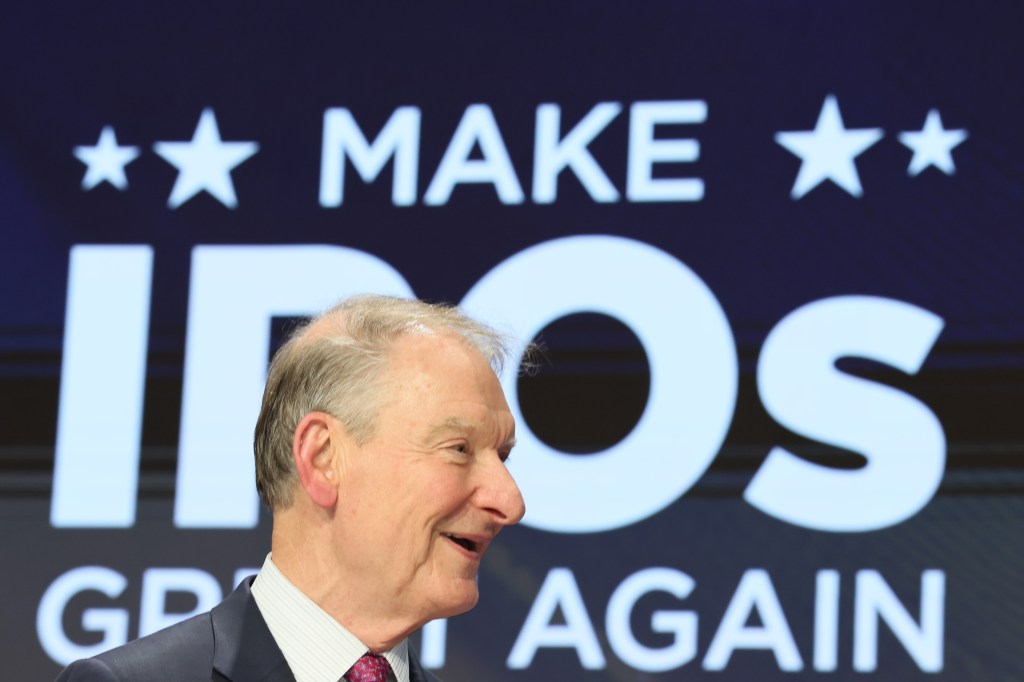

In an address to the House Financial Services Committee, SEC Chair Paul Atkins said he had recommitted the SEC to the core tenets of maintaining investor protection, market integrity, and capital formation, and criticized the previous tendency of the agency to create rules faster than the problems that they were intended to solve.
Atkins addressed several of the SEC’s most pressing initiatives to reform existing rules and regulations to increase regulatory clarity, simplicity, and cut back on costs. He discussed disclosure reform, taking proactive tack on crypto regulation, and reining in the runaway expenses of the Consolidated Audit Trail and PCAOB.
He also floated plans for a recordkeeping rule reboot in an ensuing Q&A session.
Disclosure reform and IPOs
Atkins framed disclosure costs as a competitiveness issue, telling lawmakers that public companies spend $2.7 billion per year to file their annual reports, money that he said was ultimately diverted to “corporate lawyers, accountants, and consultants” rather than fueling growth and jobs.
He said the SEC is not seeking to slash corporate disclosures as such, but to streamline them so they are more useful to investors, noting that excessively long filings “can do more to obscure than to illuminate.”
Noting that the IPO process had become more restrictive and expensive, Atkins cited the drop in exchange-listed issuers from “more than 7,800” in the mid-1990s to a mere 4,761 in September 2025.
He summarized his plan to revitalize IPOs in three action points:
- “re-anchoring disclosures in materiality so that investment decisions can turn on economic signals rather than on regulatory noise”;
- “de-politicizing shareholder meetings by restoring their focus to significant corporate matters”; and
- “allowing public companies to have litigation alternatives so that we shield innovators from the frivolous and investors from the fraudulent.”
Crypto regulation
Atkins said he supports congressional efforts to enact the watershed CLARITY Act, the first comprehensive federal crypto framework, calling it overdue, and said that the SEC was primed to implement any such legislation.
He also pointed to the SEC’s Crypto Task Force, saying staff have provided “more clarity in the past year than in the prior decade,” but noted that legislation was the most durable solution.
In parallel to coming legislation, Atkins said he and CFTC Chair Mike Selig were pursuing joint regulatory synchronization as part of Project Crypto, including formulating a possible token taxonomy in which certain crypto regulatory terms are clearly defined and provide exemptions to allow firms to move and transact on the blockchain while legislation is pending.
CAT and PCAOB cuts
Atkins said he directed SEC staff to conduct a comprehensive review of the Consolidated Audit Trail (CAT), covering governance, funding, “potential cost-savings measures,” scope, and security. Atkins has previously criticized the CAT as a waste of SEC resources, unnecessary, and a step into “mass surveillance.”
He said the SEC has already reduced the “originally-approved” 2025 CAT budget, which included about $249m in annual operating costs, by around $92m, and highlighted additional CAT plan amendments that would save about $7m–$9m annually.
Atkins also noted the SEC approved a $362.1m PCAOB budget for 2026, a 9.4% ($37.6m) decrease from the prior year, alongside pay reductions for PCAOB leadership. A House tax bill previously proposed the idea of dismantling the agency and reallocating its function to the SEC, an absorption that Atkins said the SEC “could handle.”
Recordkeeping rules
In a separate exchange with Representative Bill Huizenga (R-Mich), Atkins indicated that the SEC was working on “updated, common-sense recordkeeping rules.”
Atkins noted that the current patchwork of recordkeeping rules and requirements for broker-dealers, advisors, and rating agencies was “crazy.”