
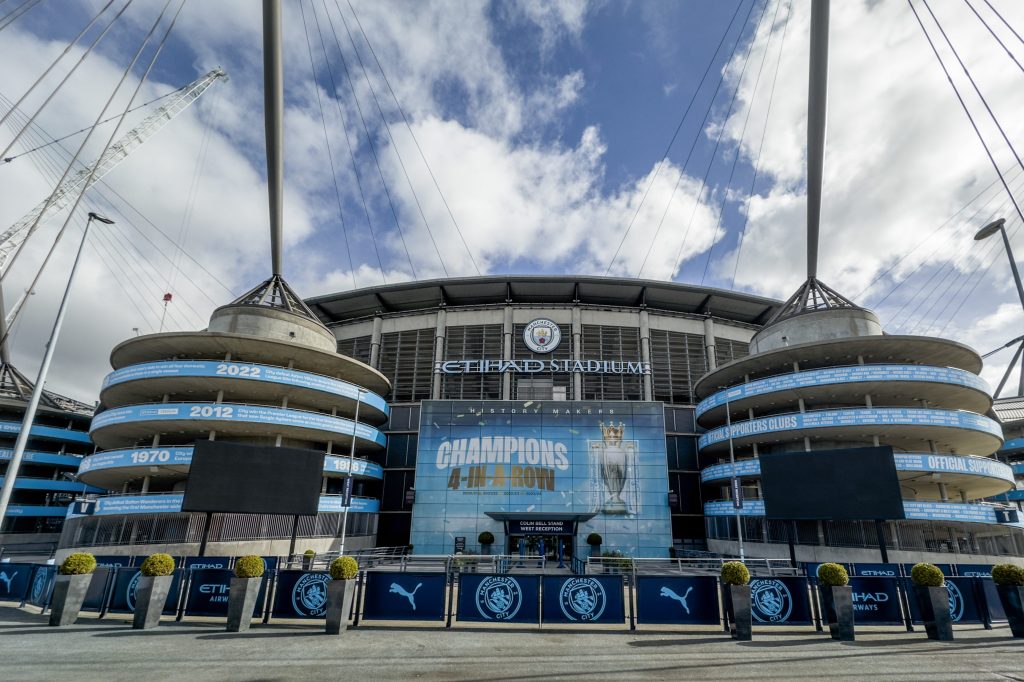

The decision in the English Premier League’s long-running case against Manchester City has inevitably led to questions extending beyond football regulation and into the realm of corporate governance, auditing, and compliance. The nearly 40-page, redacted extract of the decision publicly released in late September centres on allegations that the club misrepresented the true nature of certain sponsorship arrangements and the source of revenues recorded in its accounts.
To use the legal term, it was suggested that a number of the contracts were “shams” – contracts which deliberately misrepresent the true reality of the agreement of the parties.
If the decision’s findings are ultimately upheld following the appeals process, attention may naturally turn towards those responsible for auditing the financial statements in question.
However, while discussion of auditor liability has become increasingly common in the wake of the decision, the reality is that establishing liability against an auditor would be challenging to say the least.
The possibility of auditor liability
There are two broad possibilities of circumstances under which auditor liability may arise.
The first, and most serious, possibility is that the auditors knowingly included misleading information within the audited accounts. In other words, they were aware that the sponsorship arrangements reflected in the financial statements were not genuine commercial transactions, yet nevertheless approved the accounts as presenting a true and fair view.
If such facts could be established, the consequences would extend far beyond ordinary negligence. Deliberately certifying accounts known to be misleading would likely trigger extensive regulatory investigations, disciplinary proceedings by the relevant professional bodies and, depending on the precise circumstances, potential criminal liability.
That scenario, however, appears inherently unlikely. There is presently no indication that auditors were knowingly complicit in any alleged wrongdoing; indeed, from a balance sheet perspective, Manchester City’s headline revenue figure is likely correct. The issue, from a sports regulation angle, comes from the way in which that revenue has been classified within Manchester City’s accounts.
Demonstrating conscious knowledge or dishonesty would require compelling evidence and is a significantly higher threshold than merely showing that an audit was performed inadequately.
The more likely question: Did the auditors do enough?
The second possibility is considerably more realistic and is likely to form the focus of any discussion regarding civil liability.
The allegation against Manchester City, in broad terms, is not simply that revenue existed but that certain revenue streams presented as independent sponsorship income may in reality have originated from ownership-related funding. If that is correct, the question becomes whether the auditors undertook sufficient work to validate the underlying commercial arrangements.
Some critics argue that greater scrutiny should have been applied to sponsorship contracts, not least given the significant role they played in establishing Manchester City’s financial (and, arguably as a result, sporting) dominance. The contention would be that the auditors failed to take sufficient steps to verify whether the contractual arrangements genuinely reflected arms-length commercial agreements.
Such arguments could potentially give rise to claims in negligence or negligent misstatement. Any claimant would first need to establish that the auditor owed them a duty of care.
In practical terms, this is often a formidable obstacle.
A competing football club, sponsor, supporter, or market participant may feel aggrieved if financial information later proves inaccurate, but demonstrating that the auditor assumed responsibility towards anyone other than Manchester City’s shareholders is an altogether different matter. Without such a duty, negligence claims are unlikely to succeed irrespective of any alleged deficiencies in the audit process.
For that reason alone, widespread auditor liability arising from the Manchester City decision appears improbable.
The Wirecard comparison
The situation bears some resemblance to German litigation arising out of the collapse of Wirecard, the German payment processor whose insolvency in 2020 became one of Europe’s most significant corporate scandals.
Although the legal framework differs substantially, and German decisions have no bearing on English law, the underlying question in those cases was strikingly similar: to what extent should auditors be expected to identify fraud where they are presented with documentation that appears legitimate on its face but is, in reality, false?
Much public criticism following Wirecard centred on whether the auditors should have detected the fraud earlier. For Manchester City’s auditors, the question is broader – should they have discovered this at all?
The practical realities of commercial auditing are significant. Auditors routinely assess vast quantities of information, contracts, and supporting material.
It is difficult to suggest that statutory auditors are under a duty to independently verify every commercial contract with the relevant counterparty, particularly where that counterparty is located in another jurisdiction and no obvious concerns arise from the documentation itself. In Manchester City’s case, sponsorship agreements are ultimately an example where ordinary market standards tell only half the story – if both parties are willing to make a deal, even if that price seems inflated when compared to the market, that does not automatically make any contract illegitimate.
The mere fact that a contract later proves inaccurate or misleading does not automatically establish negligence. Accordingly, just as auditor liability proved difficult to establish in the context of Wirecard, it is likely to be equally difficult in the Manchester City context.
The real story: A regulatory failure
The allegations against Manchester City relate to conduct said to have ended some eight years ago, having commenced nearly two decades prior. Yet only now has a liability decision emerged, and that decision remains subject to what is likely to be an extensive appeal and challenge process.
The investigation, charging process, hearing and determination have themselves taken years to conclude. Such delays raise obvious concerns regarding the efficiency of football’s regulatory structures.
More fundamentally, the matter only came to light following the publication of confidential documents by a hacker. Absent those disclosures, the allegations may never have surfaced at all.
That reality should concern anyone interested in effective compliance and governance.
Improving compliance going forward
The focus must now turn to how football regulation can be strengthened so as to prevent such a seismic situation occurring again. The introduction of the Independent Football Regulator is a positive step forward, however, it is clear there is still much more to do.
The difficulty is that the Premier League’s framework, much like regulatory regimes administered by bodies such as the FCA, ultimately depends upon participants acting honestly and in good faith. No regulatory system can completely eliminate the risk of deliberate deception.
Where wrongdoing is consciously concealed, detection will always be challenging – but regulatory reform could improve the odds.
One possibility is the introduction of enhanced whistleblowing protections and reporting mechanisms. Experience across financial services demonstrates that insiders are often best positioned to identify misconduct before it becomes systemic. Robust reporting channels, coupled with appropriate protections, may significantly improve detection.
Another option would be the creation of a dedicated Premier League compliance verification body whose sole responsibility would be independently reviewing major commercial agreements, particularly sponsorship contracts involving potentially connected parties. Such a body would not replace auditors but could provide an additional layer of scrutiny focused specifically on regulatory compliance rather than financial reporting.
Whether any reforms are ultimately adopted remains to be seen. What is clear, however, is that the central lesson of the Manchester City case is that sports regulators must develop more effective mechanisms for detecting potential misconduct at an earlier stage and resolving allegations within a timeframe that is compatible with maintaining confidence in the integrity of the competition.
Sam Walker is an associate at Grosvenor Law.
