
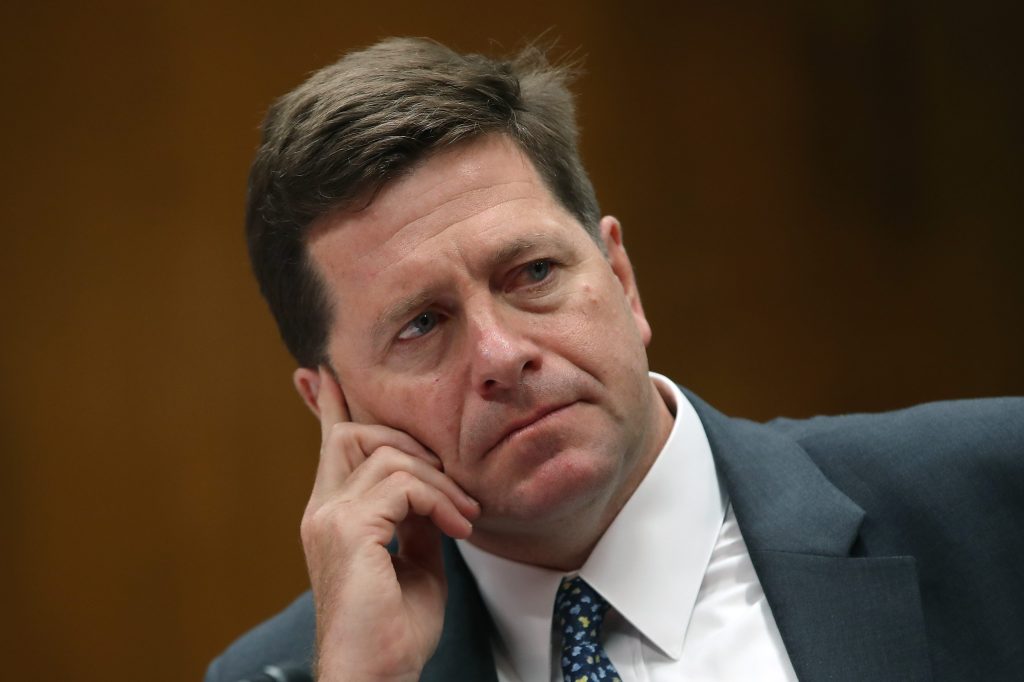

The US Attorney for the Southern District of New York (SDNY), Jay Clayton, said in a New York City Bar Association 2025 International White Collar Crime Symposium event that his office was ready to offer cooperation credit to those committed to providing useful information to prosecutors.
He then described the kind of corporate cooperation program he’d like to introduce at the large and incredibly busy US Attorney’s Office located in Manhattan.
As Law360.com notes in its write-up of the event, Clayton said: “If the corporation says we’re going to cooperate but still takes five years to get to the end of it, that’s not cooperation. I’m willing to give real benefits, if we can get the bad actors out and get to a remedy and, most importantly, compensate the victims quickly. That’s the kind of corporate cooperation program that I would like to see.”
Expediting resolutions
Jay Clayton served as chairman of the SEC from May 2017 until December 2020. He was nominated by President Trump to serve as the top attorney at SDNY earlier this year.
Clayton emphasized that cooperation credit programs can speed up resolutions, and without them, the slower pace of case investigations and settlement “make[s] remedies less effective.”
“I now say to our securities attorneys, ‘if someone in Florida lost $100 and we get them back $70 tomorrow, that’s a lot better than getting them $90 in five years,’” Clayton said.
To encourage compliance, he said he “believed the barriers and consequences corporations may face when considering whether to come forward or accept charges for white collar crimes should be reduced or eliminated.”
He continued: “We need real corporate cooperation, where the corporation and its shareholders do not sustain a serious penalty, or perhaps no penalty at all. I’ll have people come in to me and say … we’d love to agree to that charge and go forward. But we can’t, because there’s some collateral consequence.”
Clayton suggested offering all corporations that come forward a deferred prosecution agreement (DPA). This would mean criminal charges could be postponed while the corporation works on meeting certain compliance conditions – like quickly turning over necessary documents for an investigation. Those charges could then be dismissed if the corporation complies.
“You can tell your shareholders, look, we’re solving it in conjunction with the DOJ, and we’re ready to go,” Clayton said.
Clayton said he also favors corporate resolutions across different US government agencies.
“I’m advocating for a comprehensive approach across the federal government, to the maximum extent possible, to facilitate a comprehensive resolution on a timely basis,” Clayton said.
He said companies that would be inclined to enter into a resolution with federal prosecutors “at times hold back due to collateral consequences they may suffer, like an industry bar at the hands of another federal agency.”
He also gave the example of a financial firm being in hot water with authorities who might be predisposed to quickly resolving criminal liability but would need a waiver from the US Department of Labor to continue to service retirees’ investments. “We ought to be able to facilitate that process in fairly short order,” Clayton said.
Trump DOJ and incentives to self-report
Clayton’s remarks reflect broader trends across the federal justice apparatus and an attempt to align them better.
Under the Trump 2.0 administration, the DOJ adjusted its Corporate Enforcement Policy to offer institutions a clearer path to declinations and by placing less of an emphasis on corporate monitorships. The DOJ also made some changes to its whistleblower program to expand the types of corporate misconduct eligible for its Corporate Whistleblower Awards Pilot Program.
The revised whistleblower policies further incentivize companies to self-report by providing a 120-day window for the firm to self-disclose misconduct after an internal report has been made by offering the chance of a declination, even if a whistleblower already reported the violation to the DOJ.
Both of these initiatives follow President Donald Trump’s issuance of an Executive Order titled “Fighting Overcriminalization in Federal Regulations,” which states that criminal enforcement of “regulatory offenses” and “strict liability criminal offenses” are both disfavored. The order also notes that prosecution of criminal regulatory offenses is most appropriate for persons who knew, or can be presumed to have known, what was prohibited or required by the regulation and “willingly” chose not to comply.