
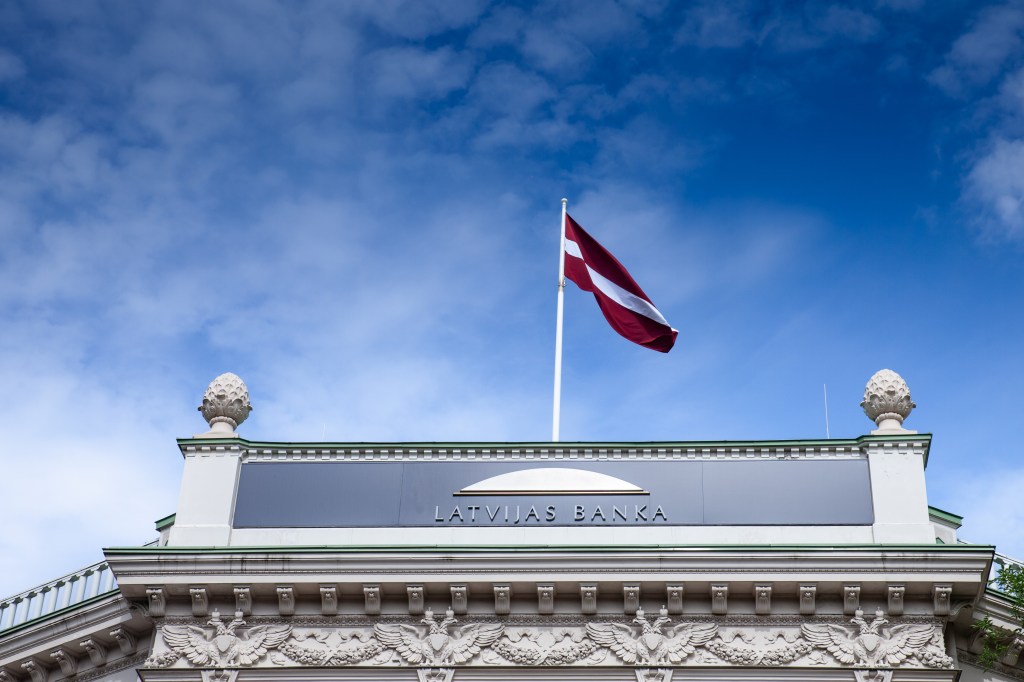

Latvijas Banka, in charge of regulating and supervising the financial market and its participants in Latvia, has set out supervisory priorities for the 2026-2028 period. These priorities form the basis for the regulator’s 2026 financial market supervision and inspection plans.
Both short and mid-term priorities take into consideration not only the ongoing external geopolitical developments, but also Latvia’s market and regulatory shifts during 2025. These include changes in the loan portfolios, and the proliferation of fintech, as well as ICT risks.
Key takeaways
Loan portfolio growth in 2025, especially for smaller credit institutions, has contributed to Latvijas Banka’s decision to assess, in 2026, the profitability of such credit institutions under evolving geoeconomic conditions, as well as the standards upheld by those bodies in credit underwriting and risk management processes.
In the insurance sector, claims settlement, which is a primary point of contact between customers and insurers, will be another key area for supervisory activities.
The regulator will also look at other sector specific issues including:
- providers – practices for determining the value for alternative investments;
- issuers – corporate governance, data quality, and sustainability; and
- investment firms – risk management and internal controls.
As a consequence of rapid developments in fintech and the related use of technological solutions by firms in the last few years, third-party operational management risks, compliance with rules on digital resilience (DORA) and payment services (PSD3) will also be key areas for supervisory focus and action.
In the areas of ICT and digital operational resilience specifically, the supervisory efforts zero in on enhancing ICT governance and outsourcing management at firms.
And the regulator will follow a risk-based approach when it comes to money laundering supervision, with a particular focus on assessing the management of risks tied to sanction circumvention.
A risk-based approach and the reduction of administrative burdens will be overarching principles applied to this crowded field of regulatory activity in Latvia.
“Latvijas Banka has assessed opportunities to reduce the administrative burden and enhance the effectiveness of cooperation between financial market participants and the supervisor. As a result, in 2026, the scope of both on-site and off-site activities requiring the involvement of financial market participants has been significantly reduced”, said Santa Purgaile, Deputy Governor at Latvijas Banka.
During 2026, Latvijas Banka is set to perform 12 on-site inspections in the following areas:
- prudential supervision (four inspections);
- investment services (two inspections);
- prevention of money laundering and sanctions violations (three inspections); and
- ICT – information and communication technologies (three inspections).
Most of the inspections will target credit institutions, with some investment firms also scrutinized. In addition, off-site activities are also planned, including 11 thematic inspections, supervisory dialogues along with several surveys.
Mid-term priorities
For the 2026-2028 period, Latvijas Banka will focus on two broad priority areas. The first is the financial and operational resilience of financial market participants amid emerging risks and geoeconomic and regulatory shifts; the second is accessibility and transparency of financial services and their alignment with customers´ needs – with targeted focus areas for various specific financial market players.
Some of the areas that reflect the regulator’s mid-term priorities include:
- credit institutions, private pension funds, and insurers – compliance with new regulatory requirements in sustainability, digital resilience and cybersecurity;
- investment firms, and payment institutions – the quality of internal control functions and risk management, including capital and liquidity adequacy along with risks connected with communication technology and money laundering;
- crypto-asset, crowdfunding service providers, and foreign exchange companies – disclosure/provision of information to customers;
- credit institutions – accessibility of financial services, including in the potential event of a national threat; and
- insurers – the supervision of insurance claims.
Latvijas Banka will also continue to provide support to market participants in meeting regulatory requirements, particularly in relation to the implementation of new regulatory frameworks.