
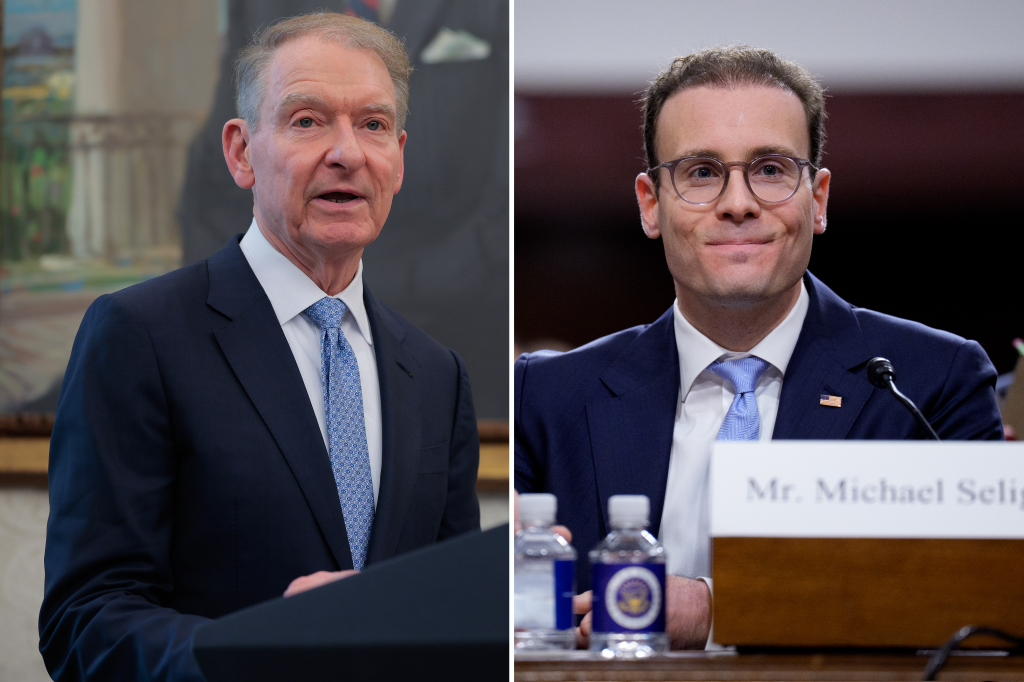

At a public event held at the CFTC’s headquarters in Washington DC, SEC Chairman Paul Atkins and CFTC Chairman Michael Selig met to discuss the future of cooperation between their two agencies on digital assets regulation. They announced that “Project Crypto” will operate as a joint effort between the two agencies going forward to “advance a clear crypto asset taxonomy, clarify jurisdictional lines, remove duplicative compliance requirements, and reduce regulatory fragmentation.”
In two introductory speeches and a subsequent fireside chat, the agency heads presented the effort as a practical coordination project aimed at reducing regulatory gaps when the same activity touches both securities and commodities rules. Atkins opened by stressing that the agencies want a “minimum effective dose” of regulation: enough to protect investors and market integrity, but not so much that it blocks innovation.
Both chairmen situated their plans within the context that Congress “has never been closer” to sending market structure legislation to President Trump’s desk. At the same time, they emphasized that markets still need clearer guidance right now, and that regulators can still set workable rules and definitions while Congress finalizes a bill – especially by creating workable regulatory labels for financial instruments to facilitate daily supervisory activities.
Tokenized collateral and taxonomy
Selig said the CFTC will look at expanding the types of high-quality assets that can be used as backing for trades when those assets are represented on a blockchain, while creating an asset taxonomy that would clarify that “digital commodities, digital collectibles, and digital tools are not securities, even when they’re sold as part of an investment contract.”
Selig stated that tokenized collateral was critical to enable looming AI-enabled blockchain technology, software systems that can interact with collateral to monitor risk in real time and execute predefined actions, and 24/7-trading markets.
And he said he has already directed CFTC staff to develop rules enabling additional forms of eligible tokenized collateral to be deployed responsibly.
Perpetual derivatives contracts and retail leverage
Selig described building a path for non-expiring products that are currently widely traded outside the US, saying that the CFTC’s aim is to bring that activity under US oversight through existing frameworks.
He also described a three-part plan for retail leveraged, margined, or financed crypto transactions: clarify when those transactions satisfy the “actual delivery” exception (so they are not treated as futures-style retail commodity transactions), set rules for the Designated Contract Markets (DCMs) that offer those transactions, and explore a new DCM registration category tailored to retail leveraged crypto trading.
Selig further pointed to clearer legal protections for software developers who work on these novel products, describing work toward safe harbors where appropriate. In the fireside chat, Atkins floated an SEC plan to carefully allow experimentation, but said it is still being developed and is being approached cautiously.
Event contract reboot
Selig said the CFTC plans to pull back two prior agency actions and replace them with a clearer rulemaking approach: a controversial 2024 proposed rule that would have barred certain election and sports-related event contracts on CFTC-regulated venues, and a 2025 staff advisory (Advisory 25-36) that warned registrants about the risks of offering access to sports-related event contracts amid state actions and potential litigation.
He also described rethinking how the agency engages in certain court fights and working with the SEC to clarify the boundary between different derivatives categories that can otherwise fall into an in-between zone.
Agency coordination and MOU
Both chairs emphasized reducing duplicative compliance burdens without blurring the legal line between the agencies, emphasizing the importance of aligning definitions and improving how the agencies share market information, so firms are not forced into two overlapping sets of obligations for the same activity.
Selig also discussed a more integrated “single platform” future, where firms could offer multiple products without navigating an inefficient patchwork of registrations, so long as there are no gaps in oversight.
Atkins said a comprehensive memorandum of understanding (MOU) between the agencies is a key step in formalizing this kind of day-to-day coordination beyond informal calls, and both suggested that staff-to-staff relationship building is part of making the partnership last.